
Artful Escapes: Unravelling the Stories Behind My Paintings
Welcome to the world of abstract painting, where creativity knows no boundaries and self-expression takes centre stage. In this blog post, I will guide you through the process of creating the perfect abstract painting by harnessing your artistic instincts and exploring various techniques. We will delve into the essence of abstract art, discuss the key elements that contribute to its success, and provide insights into the techniques used by abstract artists.
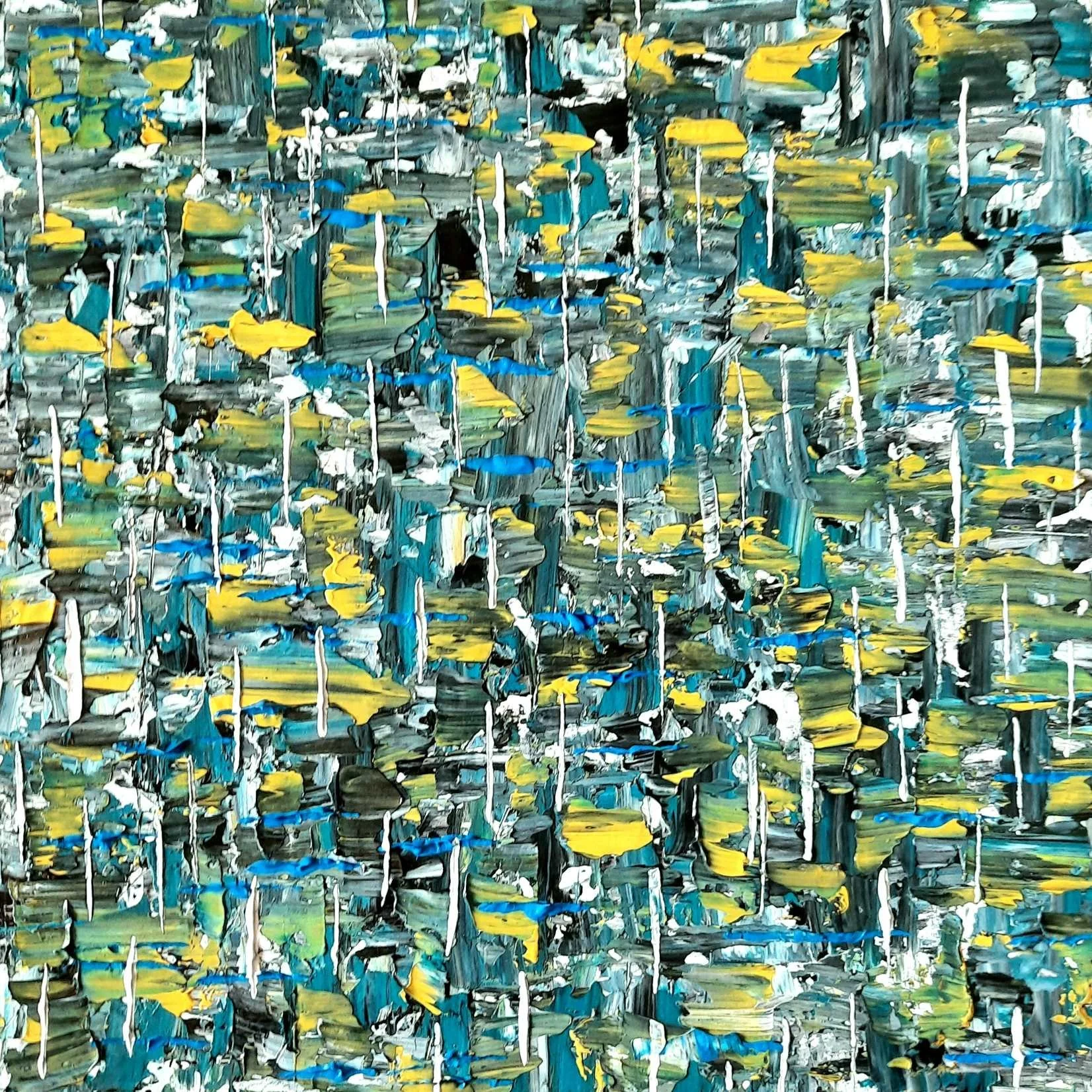
It's been a while since we've delved into the vibrant world of my artistic creations (partly because I’ve been distracted with my novel writing and finishing my latest children’s book - always busy!), and I'm thrilled to bring you behind the scenes of my recent abstract series of paintings. In this edition, we'll embark on a journey to unravel the stories and inspirations woven into the kaleidoscopic tapestry of these unique paintings. Remember, I never repeat a painting and never create prints or copies of my work so each one is genuinely unique.
Genesis
At the heart of this series of paintings lies my fascination with the interplay of colours, the dance of hues carefully orchestrated to appear random yet inherently harmonious. This is all the more interesting to me because my colour vision is extremely limited, so I must employ a little help to ensure I get the balance exactly right. The seemingly arbitrary blocks of colour are, in reality, a meticulous selection designed to complement and contrast, injecting dynamism into the artwork. Have you ever wondered how your favourite colours might interact in an abstract composition?
I must be honest and confess that many years ago I really did not understand abstract art. I thought much of what I saw was simply random splashes of colour on a canvas, deliberately intended to provoke a reaction in the viewer. I could not see the skill involved or understand how much thought actually goes into examples of good abstract art (not all art is equal!). As I learned to become an artist and explore abstract art, I also learned to understand the truth. Good abstract art is far more complex than I had previously realised.
Texture as a Visual Symphony
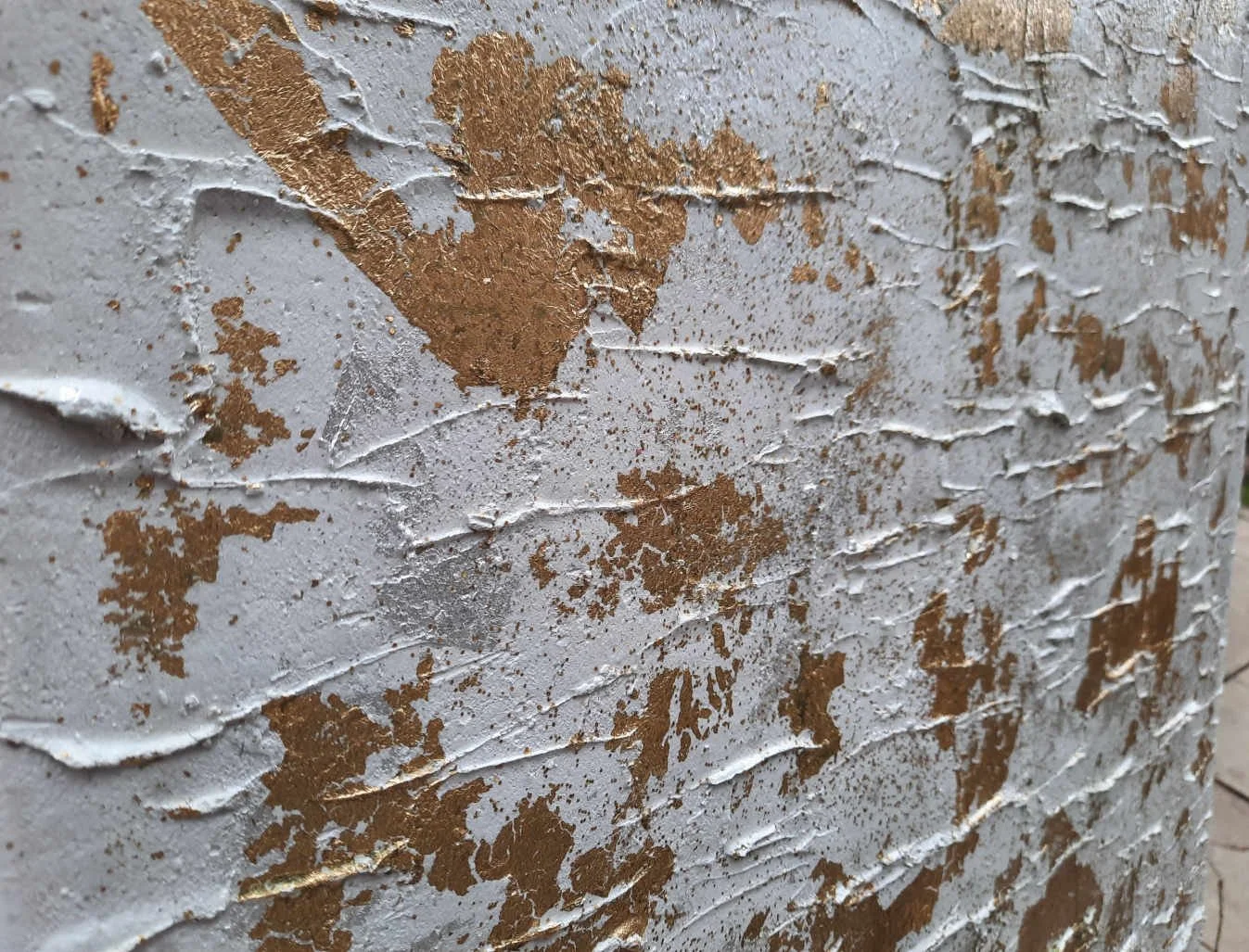
I enjoy abstract art, but I think it can sometimes be a little one-dimensional. I like to see something dynamic and moving. This led me to begin exploring the realm of texture. In what may be considered a bold departure from conventional approaches, I introduced elements like modelling paste and other media to construct elevated lines and ridges within my paintings. This textural experimentation added a layer of intrigue, transforming the artwork dynamically under the play of light. Each piece becomes a living canvas, its appearance shifting with the angle and intensity of illumination. Can you visualize how the texture might change the way you experience the art in different lighting conditions?
Inspiration: Pushing Colors to the Edge
The driving force behind this series emerged from a personal challenge—to push the boundaries of colours without descending into chaos. It's a delicate balance, a nuanced dance where vibrant tones meet structured lines. The controlled chaos of colours converges with the ordered geometry of lines, resulting in a visual symphony that invites viewers to explore the depths within. How do you feel about the bold use of colours, and does it resonate with your own sense of aesthetics?
Creating Depth Through Structure
Structured lines serve as the backbone of this series, leading the viewer's eye through the intricate dance of colour. These lines, often horizontal and vertical, provide a framework that guides the visual experience. It's an exploration of organised chaos, where the structured and the spontaneous coexist in a harmonious dance. Can you identify the structured lines within the paintings, and do they draw your eye in a particular direction?
Viewers' Perspective
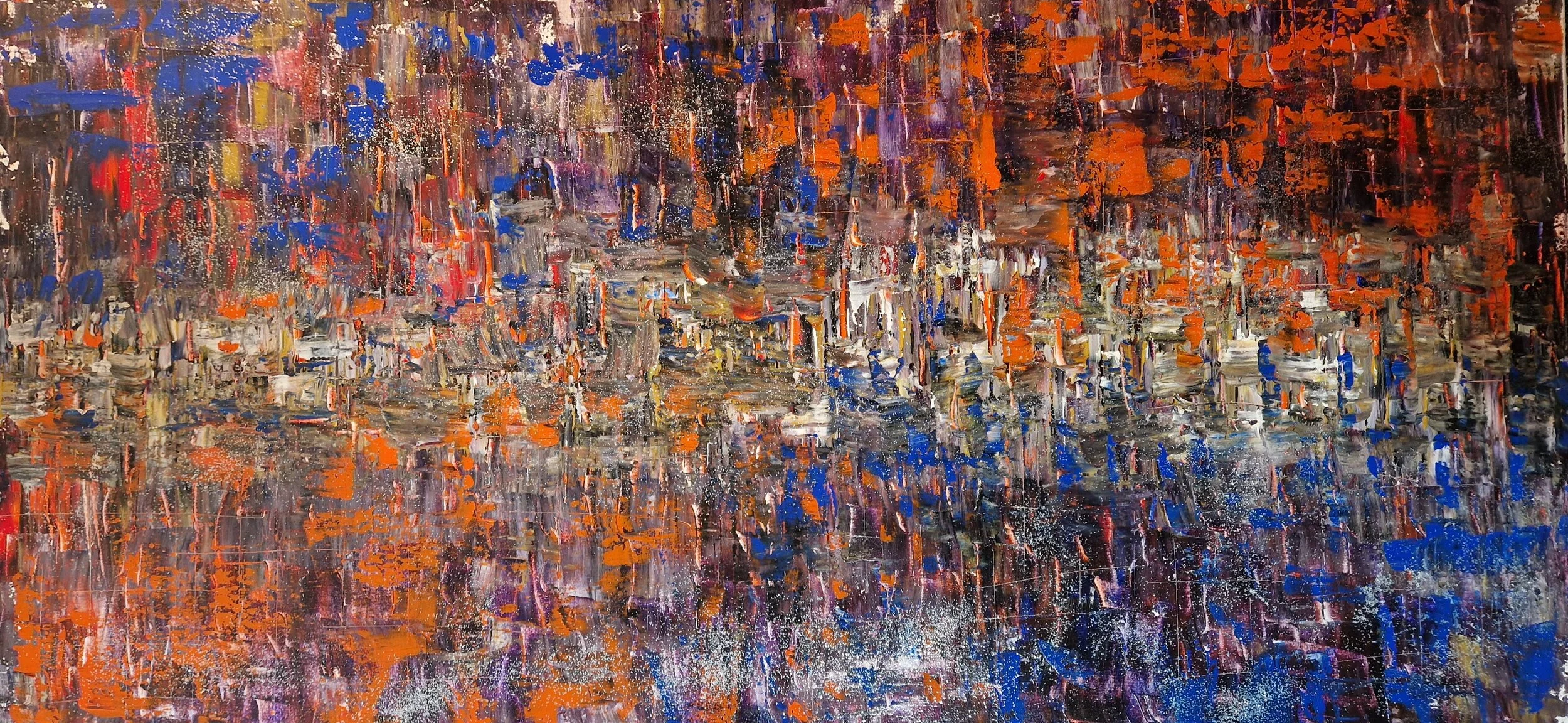
As I crafted each piece, I couldn't help but wonder how viewers would interpret and connect with these abstract compositions. The beauty of abstract art lies in its openness to interpretation, inviting each observer to bring their unique perspective to the canvas. I'm eager to hear about the emotions and stories these paintings evoke in you. What emotions do you feel when immersed in abstract art, and do you find your mind creating its own narratives?
Evolution of Style
This series marks a significant evolution in my artistic journey. The incorporation of texture and the bold use of colour represents a departure from earlier works, highlighting a continuous exploration and refinement of my creative style. What elements do you find yourself drawn to in other artists' work?
Engaging with Art
I like to think that art is a dialogue, a conversation between the creator and the audience. As you explore this series, I encourage you to not only observe but also engage. What resonates with you in this series? Is it the vibrant colours, the structured lines, or the texture that adds an extra layer of intrigue? Does this style really jar with you and, if so, tell me why?
This textured abstract art series encapsulates the essence of pushing artistic boundaries, a journey where colour, structure, and texture converge to create a visual feast. As you explore these abstract creations, I invite you to reflect on the interplay of chaos and order, spontaneity, and structure—a dance that mirrors the rich tapestry of life itself.
Until next time, keep discovering the beauty that lies within the strokes of colour and the dance of lines. I'd love to hear your thoughts and interpretations—drop a comment and let me know!
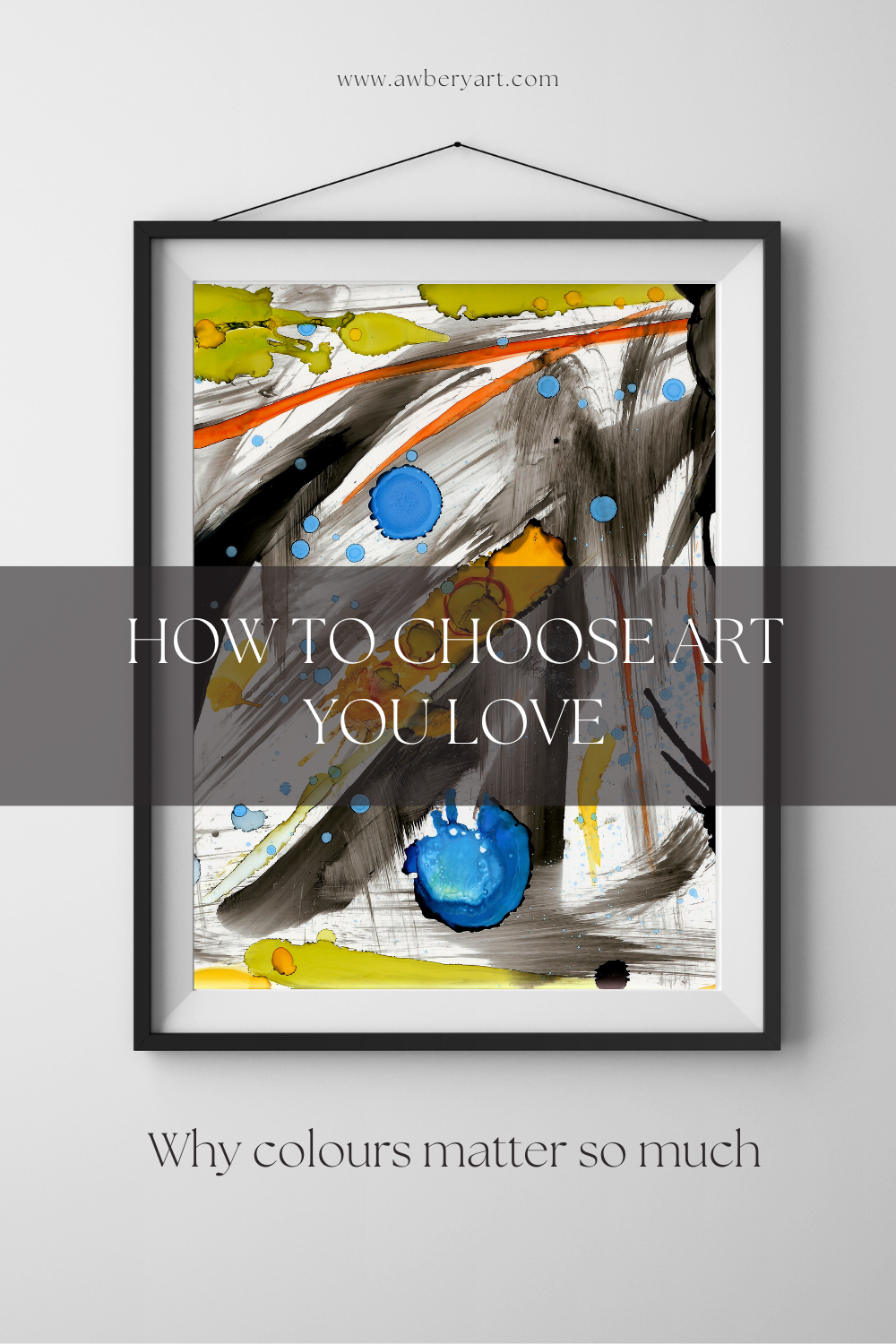
Exploring the Emotional Palette of Art - Why colour means so much to us
Colours - what a delightful language they speak! And they really do speak to us. They whisper stories, evoke feelings, and paint the canvas of our emotions. And what better place to start than understanding the very psychology of colours?
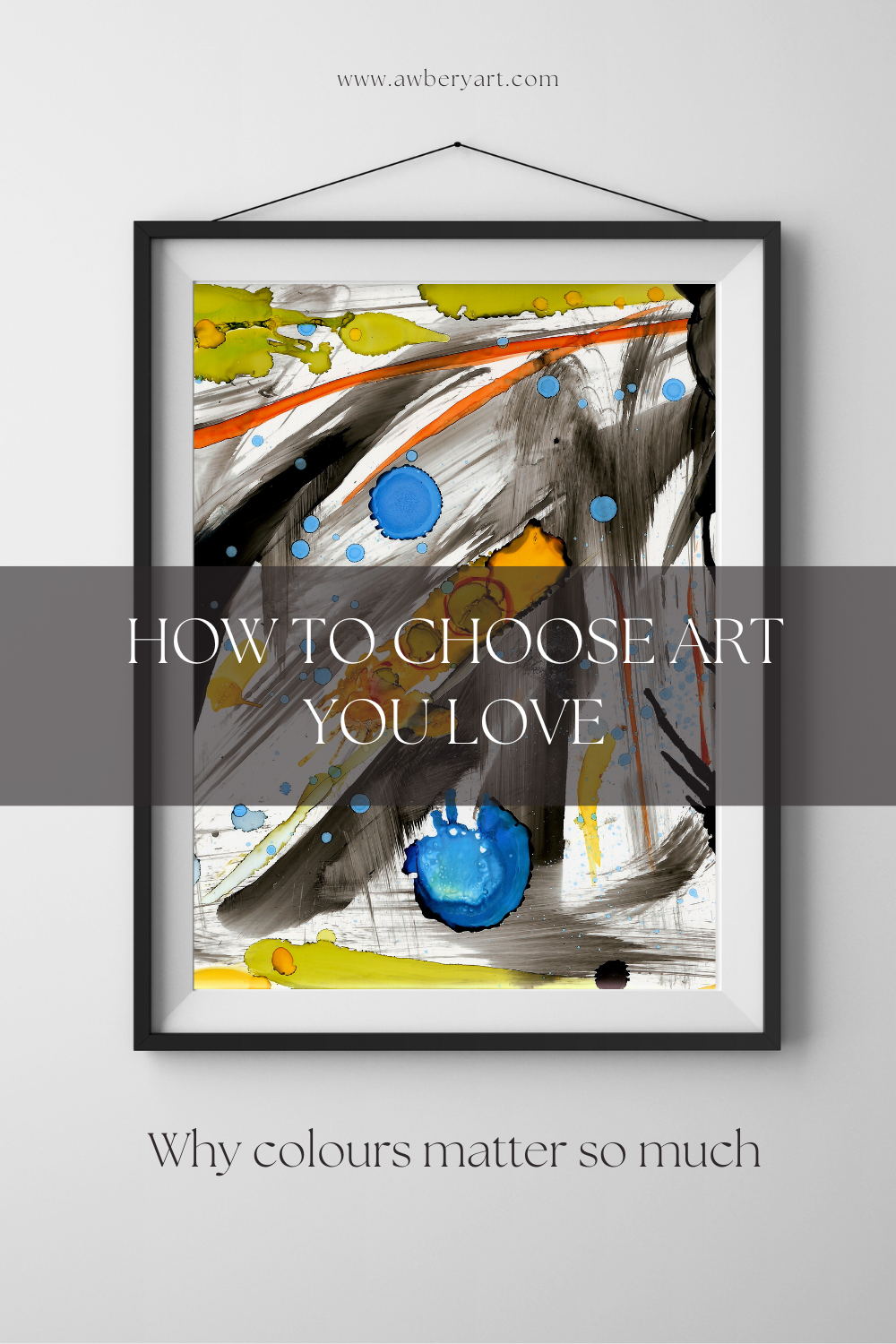
Welcome to this week’s edition of my newsletter. As you can see below, I have decided to embrace my new branding. I hope you like it. Let me know what you think. Today, we embark on a colourful journey, delving into the mesmerizing world of art and the emotions that swirl within its palette. Whether you're a seasoned art lover or just dipping your toes into the vivid ocean of creativity, join me as we unravel the secrets behind the shades that stir our souls (I think I’m becoming more poetic with each issue!).
Colours - what a delightful language they speak! And they really do speak to us. They whisper stories, evoke feelings, and paint the canvas of our emotions. And what better place to start than understanding the very psychology of colours?
The Psychology of Colors
Have you ever noticed how certain colours seem to tug at your emotions while others playfully dance on your senses? Colours have a remarkable ability to influence our moods and perceptions, a phenomenon rooted in colour psychology. Imagine walking into a room bathed in calming blues, or a space adorned with fiery reds—each hue carries its unique energy. Blues might instil a sense of tranquillity, while reds might ignite passion or excitement.
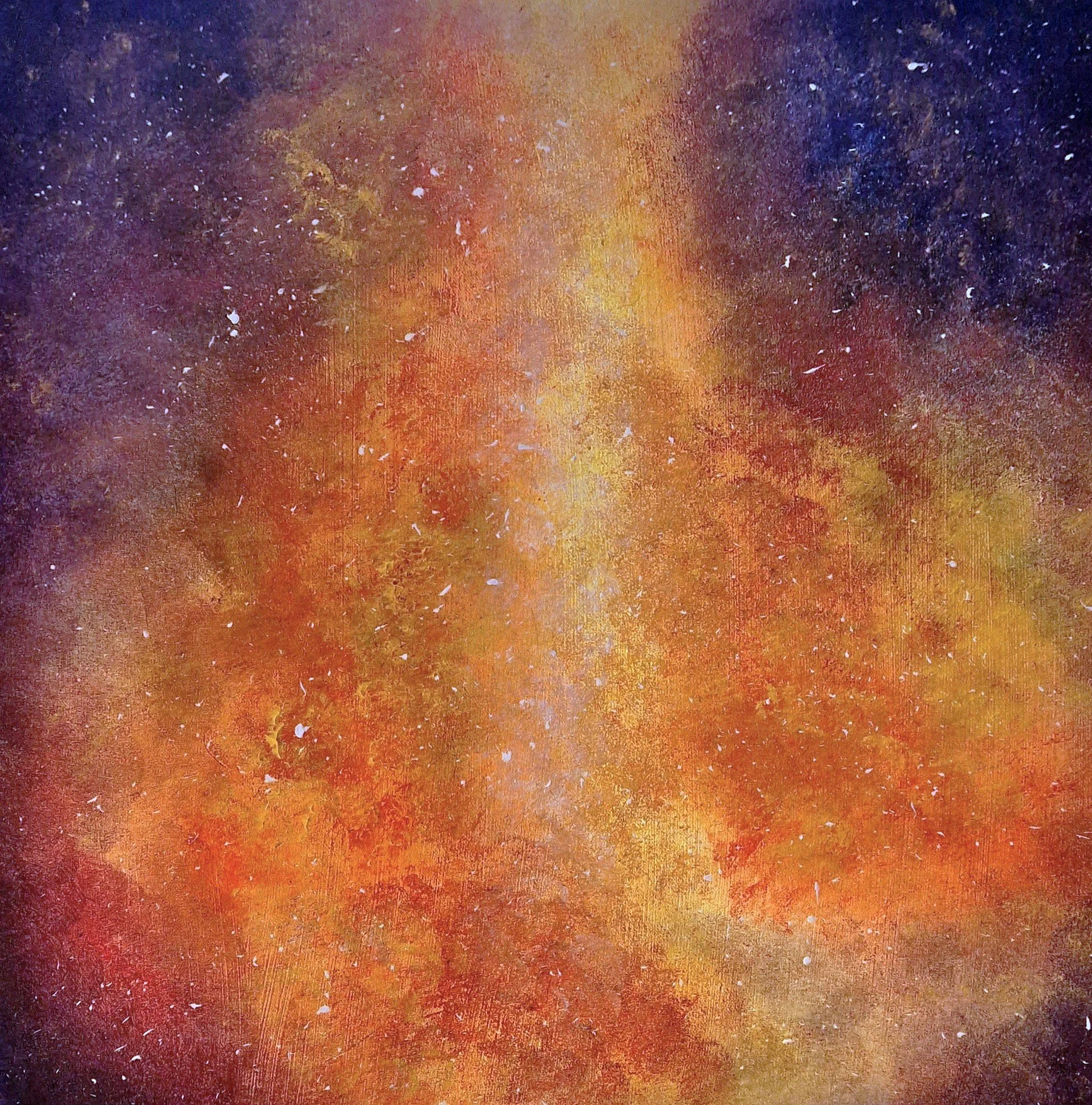
Nebula (sold) with its rich complementary colours.
As you explore the vast spectrum of emotions tied to colours, consider the colours that resonate with you personally. What shades make you feel alive, calm, or invigorated? Understanding this personal connection is like unlocking a secret door to your own emotional landscape.
You may not think colour theory is something that affects you, but I promise it does and you didn’t even realise it. There is an entire industry built around the psychology of colour and how it affects consumer behaviour. Manufacturers, supermarkets and even clothes designers spend a fortune working with experts who understand colour and how it influences how and what we buy. Don’t believe me? Read this insightful article and then look around you at the things you’ve bought. Colour theory and colour psychology are everywhere.
Emotive Hues
Let's take a plunge into the ocean of emotive hues. The spectrum is vast, ranging from the serene blues and greens that echo nature's calming embrace to the passionate reds and yellows that ignite the flames of energy. Each colour tells a story, and every shade carries its own emotional weight.
Consider the calming allure of greens—nature's embrace in a myriad of hues from deep emerald to vibrant lime. Greens often signify growth, balance, and renewal. Now, imagine the fiery embrace of reds and oranges. These warm hues can evoke feelings of passion, energy, and even urgency.
As we explore this emotional spectrum, take a moment to think about the colours that dominate your surroundings. Are you surrounded by the soothing coolness of blues and purples, or does your space pulse with the warm energy of reds and oranges?
Creating Mood with Colours
Now, let's talk about the magical art of creating a mood with colours. Artists, much like sorcerers of the visual realm, use colours to evoke specific emotions and atmospheres within their work. Picture a sunset painting awash in warm oranges and pinks—doesn't it instantly transport you to a serene, dreamy landscape?
When visiting an art gallery or perusing artwork online, pay attention to the colours that resonate with you. Are you drawn to the calming pastels that evoke a sense of nostalgia, or do you find yourself captivated by bold, contrasting hues that demand attention? Your preferences are your artistic fingerprint, guiding you to the pieces that speak to your soul.
In the vibrant tapestry of art, colours are the threads that weave stories and stir emotions. So, what colours speak to you, and how do they shape the canvas of your emotions?
Now, this is a newsletter to also entice you into looking at my artwork so why not explore more captivating colours and emotions by visiting awberyart.com and immerse yourself in a spectrum of emotions? From tranquil blues to passionate reds, each artwork is a brushstroke in the colourful narrative of emotions (well, I like to think so). Dive into the collection and discover pieces that resonate with your unique palette of feelings. Which paintings strike a chord with you and why? Let me know in the comments.

Unleashing Your Creativity: A Guide to Creating the Perfect Abstract Painting
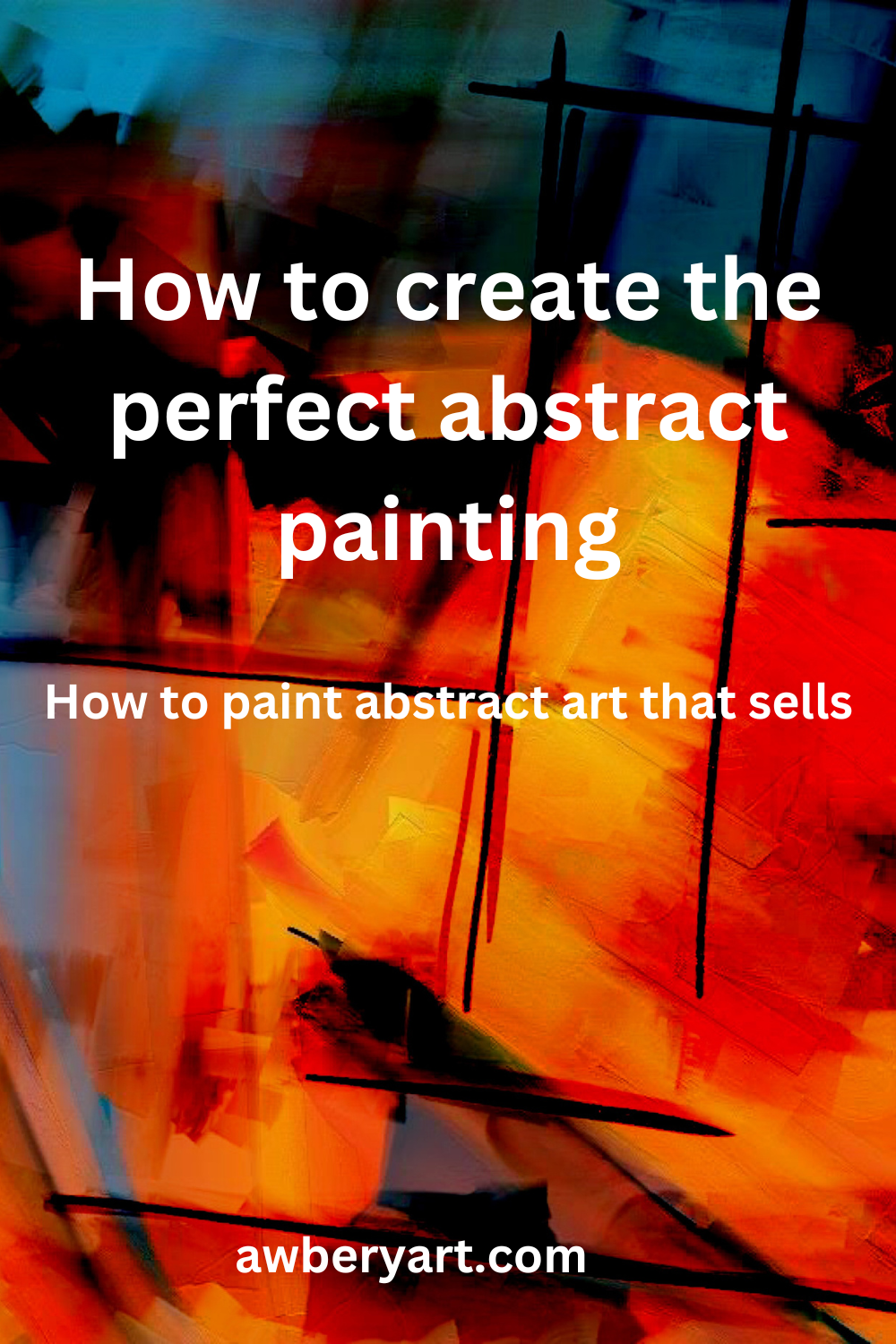
Welcome to the world of abstract painting, where creativity knows no boundaries and self-expression takes centre stage. In this blog post, I will guide you through the process of creating the perfect abstract painting by harnessing your artistic instincts and exploring various techniques. We will delve into the essence of abstract art, discuss the key elements that contribute to its success, and provide insights into the techniques used by abstract artists.
Introduction
Welcome to the world of abstract painting, where creativity knows no boundaries and self-expression takes centre stage. In this blog post, I will guide you through the process of creating the perfect abstract painting by harnessing your artistic instincts and exploring various techniques. We will delve into the essence of abstract art, discuss the key elements that contribute to its success, and provide insights into the techniques used by abstract artists.
How to Create the Perfect Abstract Painting
Creating a captivating abstract painting requires a unique blend of spontaneity, intuition, and intention. While there are no rigid rules to follow, the following steps can guide you in your artistic journey:
Embrace spontaneity and intuition
Abstract painting is a realm of artistic freedom where you can let go of the need for perfection. Allow your instincts to guide your brush, embracing the fluidity and unpredictability of the creative process. Trust your inner voice and take bold leaps into the unknown.
Start with a concept or inspiration
Though abstract art doesn't aim to represent tangible objects, having a concept or inspiration in mind can provide a starting point for your artistic exploration. It could be a particular feeling, a memory, or even a specific colour palette that resonates with you. This initial spark will serve as a guiding force as you embark on your abstract painting journey.
Experiment with composition
Composition is a fundamental aspect of abstract art. Consider the placement of shapes, lines, colours, and textures within the canvas. Explore different arrangements, proportions, and perspectives to find a balance that conveys the desired energy and visual impact. Allow the composition to evolve organically as you interact with the canvas.
Making a Good Abstract Painting
While there are no strict rules for abstract painting, certain elements and techniques can enhance the quality of your artwork. Here are some key factors to consider:
Engage with colour theory
Colours hold immense power in abstract art. Experiment with different colour combinations to evoke specific emotions or create a harmonious balance. Dive into the realm of colour theory, understanding the psychological effects of different hues and their interactions. Use colours purposefully to enhance the overall impact and create a captivating visual experience.
Use varied textures
Texture adds depth and intrigue to abstract paintings. Experiment with techniques like layering, impasto, or glazing to create texture and tactile elements. Building up layers of paint or incorporating other materials can add dimension and complexity to your artwork, captivating the viewer's senses.
Establish a focal point
While abstract art does not rely on recognizable subjects, having a focal point can anchor the viewer's attention and create visual interest within your painting. It could be a particular shape, colour, or area that stands out from the rest of the composition. Use contrasting elements or techniques to draw the viewer's eye towards the focal point, creating a sense of intrigue and engagement.
Are there rules for abstract painting?
Abstract painting liberates you from the constraints of traditional rules, allowing you to explore your artistic vision freely. However, there are guiding principles that can enhance your abstract artistry:
Balance and harmony
Strive for a sense of balance and harmony within your composition. Distribute visual weight evenly, considering the placement of elements and their relationship to one another. Achieving a harmonious balance will create a cohesive and aesthetically pleasing artwork.
Experimentation and exploration
Abstract art thrives on experimentation and pushing boundaries. Embrace unconventional techniques, materials, and approaches to create unique and intriguing artwork. Challenge yourself to explore new territories and uncover hidden depths of your creativity.
Authenticity and personal expression
Abstract painting provides a platform for personal expression. Avoid trying to mimic other artists' styles and focus on developing your own artistic identity. Embrace your unique perspective and let your artwork reflect your authentic self. Unleash your emotions, thoughts, and experiences onto the canvas.
What are the 6 key elements to abstract art success?
To achieve success in abstract art, consider these six key elements:
Composition: The arrangement of shapes, lines, colours, and textures within the artwork plays a vital role in its visual impact. Experiment with different compositions, exploring the interplay between various elements to create a visually appealing and balanced artwork.
Colour: Colours have the power to evoke emotions and set the mood of your artwork. Explore different colour palettes, combinations, and contrasts. Consider the psychological effects of colours and use them purposefully to enhance the overall impact of your abstract painting.
Texture: Texture adds depth and tactile interest to your artwork. Experiment with techniques such as layering, brushwork, or mixed media to create varied textures that engage the viewer's senses. Incorporate elements that invite touch and exploration.
Contrast: Contrast adds visual interest and helps create focal points within your abstract painting. Experiment with contrasting colours, shapes, or textures to create dynamic compositions. The interplay between light and dark, smooth and rough, or bold and subtle can heighten the impact of your artwork.
Movement: Abstract art often conveys a sense of movement or energy. Explore the use of lines, shapes, and brushstrokes to create a sense of flow and rhythm within your painting. Consider the direction and velocity of your marks to evoke a dynamic visual experience.
Emotional resonance: Abstract art has the ability to evoke emotions in the viewer. Aim to create artwork that resonates emotionally, whether through the use of colour, composition, or personal expression. Infuse your artwork with your unique perspectives and experiences, allowing the viewer to connect with the emotions conveyed in your abstract painting.
Techniques Used by Abstract Artists
Abstract artists employ a variety of techniques to create their unique artworks. Here are some commonly used techniques:
Layering
Building up layers of paint adds depth and complexity to your artwork. Experiment with transparent and opaque layers to achieve desired effects. Each layer interacts with the previous ones, creating a rich and visually engaging surface.
Brushwork
The choice of brushes and brushstrokes can add texture, expressiveness, and movement to your abstract painting. Vary the brush sizes, angles, and pressure to create a range of effects, from delicate and controlled to bold and expressive.
Pouring and dripping
Pouring or dripping paint onto the canvas can result in spontaneous and organic patterns. This technique allows for chance and serendipity in the creation process, leading to surprising and captivating results.
Collage and mixed media
Incorporating different materials, such as paper, fabric, or found objects, can add texture, dimension, and visual interest to your abstract artwork. Experiment with layering various materials to create unique and compelling compositions.
Sgraffito
Scratching or scraping the surface of the painting can reveal underlying layers and create intriguing textures. Use tools like palette knives or the end of a brush to scrape away paint, adding depth and visual interest to your abstract artwork.
Conclusion
Abstract painting is an exhilarating journey of self-expression and creative exploration. By embracing spontaneity, experimenting with composition, engaging with colour theory, and exploring various techniques, you can unlock your artistic potential and create captivating abstract art. Remember, there are no limits to your creativity in the abstract realm. Embrace the freedom, follow your intuition, and let your artwork reflect the depths of your imagination.
Embracing the Artist Within: Balancing Work and Creative Passions
In the fast-paced world we live in, finding a balance between work and personal pursuits can be challenging. As a scientist with a full-time job, I understand the importance of maintaining a good work-life balance. While you may be interested in my art and book writing rather than my day job, I believe that striking a harmonious equilibrium between professional responsibilities and personal passions is key to living a fulfilling and enriched life. In this blog post, I'll share my journey and provide practical tips on how I manage to pursue my creative endeavours alongside my demanding career.
Introduction
In the fast-paced world we live in, finding a balance between work and personal pursuits can be challenging. As a scientist with a full-time job, I understand the importance of maintaining a good work-life balance. While you may be interested in my art and book writing rather than my day job, I believe that striking a harmonious equilibrium between professional responsibilities and personal passions is key to living a fulfilling and enriched life. In this blog post, I'll share my journey and provide practical tips on how I manage to pursue my creative endeavours alongside my demanding career.
Introduction
In the fast-paced world we live in, finding a balance between work and personal pursuits can be challenging. As a scientist with a full-time job, I understand the importance of maintaining a good work-life balance. While you may be interested in my art and book writing rather than my day job, I believe that striking a harmonious equilibrium between professional responsibilities and personal passions is key to living a fulfilling and enriched life. In this blog post, I'll share my journey and provide practical tips on how I manage to pursue my creative endeavours alongside my demanding career.
Discovering My Creative Passions
For me, the journey into art and book writing began with a desire to explore new hobbies and indulge in learning new things. It was a thoughtful gift from my wife—a watercolor set—that sparked my interest in art, while my love for writing was nurtured through years of journaling. These creative outlets became an essential part of my life, allowing me to escape the demands of work and express my inner thoughts and emotions.
Time Management
To make room for my artistic pursuits, I prioritize efficient time management. I mark out my working day calendar, ensuring that I typically finish work by 4pm. This allows me to create clear boundaries between my professional and personal time. Calendar blocking has been a game-changer for me—I allocate specific time slots for meetings, emails, and other work-related tasks, as well as dedicated blocks in the evenings for my writing, planning, painting, and engaging with social media and marketing efforts.
Transitioning from Work to Creativity
Transitioning from the demands of my day job to the realm of creativity requires a deliberate mindset shift. Taking 30 minutes to wind down after work helps me decompress and mentally prepare for my creative projects. Additionally, I find it essential to have separate spaces for different activities. While my office serves as a workspace for my day job, I've designated a separate desk for writing, complete with a mood board for inspiration, and a dedicated studio space for my paintings. This compartmentalization helps my brain recognize which activity I'm focusing on and allows for smoother transitions.
Setting Boundaries
Creating a healthy work-life balance also means setting boundaries and avoiding work-related distractions during personal creative time. After 4pm, I intentionally disconnect from work by not having my work laptop or mobile phone accessible. This practice ensures that I can fully immerse myself in my artistic pursuits without the intrusion of work-related matters.
Finding Inspiration
Inspiration can be found in the world around us. As an observant person, I draw inspiration from my surroundings, incorporating what I see and hear into my writing and artwork. I also seek inspiration from online resources, such as videos and blogs by inspirational artists and writers. Engaging with their work sparks my creativity and fuels my passion for continuous growth.
Prioritization and Goal-Setting
Lists are my trusted allies in maintaining focus and prioritizing my creative endeavors. I keep a list of long-term goals for both my work and my artistic pursuits, breaking them down into manageable weekly and daily objectives. This approach ensures that I dedicate time to writing blog posts regularly and creating new artwork consistently. By organizing my goals, I am able to balance my professional responsibilities with my personal passions effectively.
The Crossroads of Work and Creativity
Embracing creative outlets alongside my scientific career has brought numerous benefits into my life. Engaging in art and writing expands my mind, constantly challenging me to learn and grow. These pursuits not only provide me with personal fulfillment but also offer unexpected advantages in my day job. Developing writing skills has improved my formal report writing, while my knowledge of social media has enhanced my presentation abilities. The intersection between my personal interests and professional life has created a dynamic synergy, benefiting both aspects of my life.
Final Thoughts and Advice
To those struggling to find time for their own creative passions, my advice is to evaluate the free time available and make conscious choices. Eliminating or reducing time spent on activities like excessive TV-watching can free up valuable hours for meaningful and enjoyable pursuits. Remember, balance is achievable with careful planning and prioritization. Embrace your passions, allocate time mindfully, and witness the transformative power of creative expression.
Maintaining a healthy work-life balance is a continuous journey that requires intention and effort. As a scientist with a love for art and writing, I've learned that dedicating time to my creative passions not only enriches my personal life but also enhances my professional growth. By implementing strategies like effective time management, setting boundaries, finding inspiration, and prioritizing goals, I've been able to strike a harmonious balance between my day job and my artistic pursuits. Embrace your inner artist and create a life where work and creativity coexist in harmony—it's an incredible journey worth embarking on.
Thank you for reading Roy P. Awbery Fine Art. This post is public so feel free to share it.
The Power of Daily Sketching: Unleashing Your Creativity
Welcome to my blog, where I dive into the incredible benefits of daily sketching and drawing. Whether you consider yourself an artist or not, incorporating sketching into your daily routine can have a profound impact on your creativity and personal growth. As I explore different subjects and experiment with various techniques, I discover new ideas and perspectives. Sketching enhances my observation skills, allowing me to appreciate the intricate details of the world around me. It also provides a meditative experience, where I can unwind and embrace mindfulness. Through this blog, I invite you to join me on this journey of self-expression, creativity, and exploration. Let's start sketching every day and witness the transformative power it holds to unleash our inner artist and foster personal growth.
Introduction
I’ve sketched for as long as I can remember. I can’t say I was ever particularly good at it and I never researched the subject in my youth (I wish I had now). Over the years, I have found that I mainly sketched to relax. In our fast-paced world, I think taking time for self-expression and creativity is often overlooked, especially when I see so many people ‘relaxing’ with their phones! However, engaging in a daily sketching or drawing practice can have transformative effects on your life. Whether you consider yourself an artist or not, the act of putting pen to paper holds incredible potential. Here are some compelling reasons why you should make sketching or drawing a part of your daily routine. Trust me, if you get started you won’t regret it and you never know where it may take you.
1. Unlocking Creative Potential
Creativity is a fundamental aspect of the human experience. Engaging in daily sketching exercises helps you tap into your creative potential. For example, you can dedicate a small portion of your day to sketching a random object you find at home or capturing a moment from your surroundings. By exploring different subjects, experiment with colours and lines, and push your artistic boundaries, you'll discover new ideas and perspectives.
If you want to get started, create a dedicated space for your sketching practice, free from distractions. You should, if possible, set aside a specific time each day to sketch, even if it's just for a few minutes - it will help relax you. Perhaps use it as part of your end-of-day wind down process. Don’t be afraid to experiment with different mediums, such as pencil, pen, charcoal, or watercolour, to keep your practice fresh and exciting.
Recommended Reading: "The Artist's Way" by Julia Cameron provides valuable insights and exercises to unleash your creativity and overcome creative blocks.
2. Enhancing Observation Skills
Sketching trains your eye to see the world more attentively. By focusing on the details of your subject, you become more observant of the intricacies and nuances in your surroundings. You can start by sketching everyday objects in your home, such as a coffee mug, a potted plant, or a piece of fruit. Pay close attention to their shape, texture, and lighting.
Of course, you can also combine your other daily routines with sketching, for example:
Take regular walks where you live and sketch interesting scenes or objects you encounter.
Practice sketching from life whenever possible, as it allows you to observe and capture the unique characteristics of your subject.
Experiment with different sketching techniques, such as contour drawing, cross-hatching, or gestural sketching, to further develop your observational skills.
Recommended Reading: "The Zen of Seeing: Seeing/Drawing as Meditation" by Frederick Franck explores the connection between art and meditation, emphasizing the importance of observation in the creative process.
3. Practicing Mindfulness and Relaxation
Engaging in sketching or drawing provides a meditative experience that promotes mindfulness and relaxation. When you immerse yourself in the act of drawing, you enter a state of flow, where time seems to dissolve, and you're fully present in the moment. To enhance this experience, consider sketching natural scenes, such as landscapes or flowers, allowing yourself to connect with the tranquillity of the environment.
Suggestions for Success:
Create a calming atmosphere by playing soft music or lighting candles while you sketch.
Practice deep breathing exercises before and during your sketching session to centre yourself and enhance relaxation.
Embrace imperfections and focus on the process rather than solely on the end result. Sketching is about the joy of creation and self-expression.
Recommended Reading: "Drawing on the Right Side of the Brain" by Betty Edwards offers valuable insights into the creative process and how drawing can enhance mindfulness and self-expression.
4. Tracking Personal Growth and Progress
Daily sketching allows you to document your artistic journey over time. By committing to regular practice, you can witness your progress first-hand. Consider keeping a sketchbook dedicated to your daily sketches, allowing you to look back on your earlier drawings and compare them to your present work. Celebrate your improvement and recognize how far you've come as an artist.
I have tons of Moleskine sketch books, which although not cheap are high quality, but you could use any notebook you can find. As you begin recording your sketches be sure to date each sketch in your sketchbook to keep track of your progress and don't be afraid to experiment and take risks in your sketches. Push yourself out of your comfort zone to foster growth and development. If you’re brave enough, seek constructive feedback from friends or artists you may know or join online communities where you can share your work and receive encouragement.
Recommended Reading: "Steal Like an Artist: 10 Things Nobody Told You About Being Creative" by Austin Kleon encourages embracing the influence of others while maintaining your unique artistic voice.
5. Enhancing Visual Communication Skills
Visual communication is a powerful tool that transcends language barriers. Through sketching or drawing, you develop the ability to convey ideas, emotions, and narratives visually. To enhance your visual communication skills, consider sketching people, capturing their expressions and gestures, or creating visual stories through sequential art.
If you get really into sketching then you could also try the following ideas to help you improve:
Experiment with different composition techniques to create visual impact and guide the viewer's attention.
Study the work of artists known for their storytelling abilities, such as graphic novelists or storyboard artists, to learn effective visual narrative techniques.
Practice simplifying complex concepts into visual representations, such as diagrams or infographics, to improve your ability to communicate ideas concisely.
Recommended Reading: "Visual Thinking: Empowering People and Organizations through Visual Collaboration" by Willemien Brand provides insights into the power of visual thinking and communication in professional and personal settings.
6. Cultivating Self-Expression and Personal Style
Sketching regularly enables you to explore and develop your unique artistic style. As you experiment with different techniques, materials, and subjects, you discover what resonates with you and what makes your work distinct. Embrace this journey of self-discovery and allow your sketches to be a reflection of your thoughts, feelings, and experiences.
Suggestions for Success:
Study the work of various artists, both traditional and contemporary, to expose yourself to different styles and approaches.
Keep a collection of images, objects, and ideas that inspire you and refer to them when seeking inspiration for your sketches.
Experiment with different mediums, styles, and subjects to find what resonates with you and allows you to express yourself authentically.
Recommended Reading: "The Creative License: Giving Yourself Permission to be the Artist You Truly Are" by Danny Gregory encourages embracing your artistic voice and finding inspiration in everyday life.
Conclusion
Sketching or drawing every day offers a myriad of benefits that extend beyond the realm of art. From unlocking your creative potential to improving observation skills, promoting mindfulness, enhancing visual communication, tracking personal growth, and cultivating self-expression, the power of this simple practice is undeniable. So, grab a sketchbook and a pencil, and embark on a journey of self-discovery, growth, and artistic expression. Make sketching a part of your daily routine and witness the transformative effects it can have on your life.
If you do get started, feel free to show me your creations. I started out sketching years ago and it eventually led me to becoming a successful semi-professional artist. Who knows where it may take you?
How to Price your Paintings so your artwork will sell - in 7 easy steps
Assigning value to your own paintings is often difficult and setting a price on artwork can be a challenge. Here I explain how a simple formula and some research can help and keep emotions put of the calculation. In a hurry? Here’s a summary for you:
Price up material costs (point 2)
Price up your promotion, advertising and website fees (point 3)
Price up your sellers transaction fees (point 4)
Price up your postage and packaging costs (point 5)
Price up the size of your painting (point 6)
Check your pricing (point 7)
So, you’ve finished painting and your artwork is ready to be sold, but how do you value your work and set a fair price? I’m not selling a secret formula nor am I going to tell you some complex method. Here, I ask and answer the questions you need to know to be able to price your art to sell. Simple!
In a hurry? Here’s a summary for you:
Price up material costs (point 2)
Price up your promotion, advertising and website fees (point 3)
Price up your sellers transaction fees (point 4)
Price up your postage and packaging costs (point 5)
Price up the size of your painting (point 6)
Check your pricing (point 7)
1.Why do you want to sell your painting?
This may seem like an odd question but if you are just creating art as a hobby and hoping to sell the fruits of your labour your motivation will be very different to someone wanting to make a living from their sales. For the latter, you will want to be paid an hourly rate whereas a hobbyist is less concerned with the value of their time, after all, they are creating during their free time!
Personally, although I now sell my artwork on a regular basis I don’t charge by the hour. I find this unfair because I might find that I’m a very slow artist compared to others and I would therefore be charging unfairly high rates for my slowness - hardly fair on the customer! On the other hand, I might be very fast and then underselling my work! I’ll come back to how I charge later on. (if you can’t wait go straight to point 6!)
2.How much do your materials cost?
A really good habit to get into from the start is to keep records of everything you buy when you create artwork. I didn’t at first and it created all sorts of problems later on. I keep a folder for all of my receipts (which I number sequentially) and a log book (just a spreadsheet in Excel) to make a note of the following information:
Receipt Number
Date on receipt
Merchant or shop name
Details of the materials purchased
Net cost
Tax
Total cost
Trust me, later on you will be glad you did this!
Now, the first value you need to know is the total cost of the materials used to create your artwork. Obviously, you won’t use all the paint in a tube so you need to estimate how much you’ve used and divide the cost up accordingly. Don’t forget to include the following:
Paints
Varnish
Canvas
Primer
Mounts and frames (including fixings)
3. How much do your website, online shop and advertising/promotion cost?
This often gets overlooked but can be a considerable hidden cost that can eat into your profits. It’s all well and good creating art that people will buy but if you have to pay to let people know it exists then that cost also needs to be recovered.
Simply add up the total costs of all of the platforms and services you pay for that directly promote, advertise or support your artwork sales. Make a note of the total cost.
I don’t mind telling you that my total costs amount to around £120 per year and I started off aiming at selling, on average, two paintings a month. So, I simply divided the cost by 12 and again by 2 meaning I add £5 to all of my paintings to cover these costs.
4. How much do you get charged for sellers’ transaction fees?
This is another one that often gets forgotten but can be quite significant. Etsy, Ebay, Square and PayPal are all great but they all charge you for completing a transaction. Don’t forget that with Etsy you are paying both to list your item as well as completing a transaction. The sellers fees are clear to see so look up your costs for the value of the artwork you’re selling and add this to your running total of costs.
5.How much does it cost to package and post your artwork?
It’s a fact that everyone loves getting something for free. It’s also a fact that nothing is ever really free!
From my personal experience, I have found that advertising my artwork with free postage and packaging makes the artwork a lot more desirable and I have gained more sales since removing this as a separate charge. It also seems that Etsy will favour listings that offer free delivery.
I learned the hard way on this when I sold a painting last year and, after buying the packaging materials and paying for postage, I made a profit of just £3! Hardly worth the effort! I so wish someone had written this blog and sent it to me beforehand!
So, make a note of the cost of postage and packaging for each painting.
TOP TIP: Make friends with your local post office and ask them to assess your paintings for size and weight to provide an estimate for postage costs AND NEVER POST 1ST CLASS - seriously, it makes no difference at all to the speed of delivery (an insider tip from the Royal Mail!).
ANOTHER TIP: Buy bubble wrap, parcel paper and card wrap in bulk - it is much cheaper that way and will keep your costs down. I also re-use all of my outer cardboard packaging.
6. How to value your artwork - pricing your painting
Okay, this is really what you wanted to know, isn’t it? As promised at the start, I’m not about to direct you to some random website with a secret formula that you’ll have to pay for. Nor will I insist that you have to sign up to my exciting newsletter to learn my secrets - although I’d love it if you did sign up below and become a subscriber!
I have two charging rates that I use; one for artwork that I produce myself and another for commissioned work where I am working to someone else’s specification.
Pricing my own paintings:
Total cost of all materials and services included postage and packaging
Double this figure and note it. This may seem odd but this will easily cover you for other additional costs such as your tax (see note below) and other incidental costs that you will not have foreseen or realised. This is also a common practice amongst gift retailers, so I’ve been told.
Measure your painting in inches and multiply the height by the length.
Multiply your painting size by a factor.
Okay, this is the nebulous bit. If you had a factor of 1 you would be charging £1 per square inch. For a modest canvas of 16x20 inches, this would cost £320 before even adding your material costs. This might be a lot for a new artist to hope for.
I started off using a factor of 0.15 when I first started to sell and this seemed reasonable and I made sales. My factor has steadily increased as my sales have increased, which is inevitable and expected. Indeed, this is actually a good thing for those that bought my art when it was cheaper - their paintings have effectively increased in value!
Finally, simply add your painting value to your material costs and you have the total cost for your painting.
Pricing my commissions
I use the same calculus as above but I use a higher multiplication factor for charging commissions. The reason for this is that I put a lot more time and effort into these works and they often involve more time interacting with the client to develop the specification and I also produce prototypes before embarking on the final painting. I use the same factor for all commissions regardless of painting style or genre so every client is being treated equally and fairly.
Most of my commission clients are very private about the amount they have paid for their artwork so I will not be divulging my charging rate. I will say however, that I always agree the price up-front with the client and, on the basis that I’ve never had a painting declined, I guess I’m pricing them about right.
NOTE: Currently in the UK a hobbyist or “self-starters” can earn up to £1000 per annum (gross) before needed to register for, and pay, tax.
7. Are your prices reasonable and realistic?
The final thing I do with my painting prices is check them with similar works online. This is relatively easy to do with Etsy because you can search for paintings in your similar style, size and media. Then look at the sellers. It is relatively easy to work out who are new artists (or at least new to selling) and those who are professional or have been selling for a long time.
Rather helpfully, Etsy will tell you how long someone has been on the platform as a seller, will tell you how many products they have sold and also how many positive reviews they have had. You can then read their bio to see if they are in the same place as you, in terms of artistic journey.
Armed with this knowledge you can down-select those sellers that are most similar to you and look at how much they are charging for similar artwork. I review my pricing periodically and have found that this works well and my prices, even though they have been steadily increasing, are still in line with the prices of other artists’ work of similar quality, style and size.
Of course, the final litmus test for any pricing strategy is sales. If people are prepared to pay what you are asking for you’re probably doing it right (or maybe even undershooting a little). If you aren’t making any sales then your pricing may be off. In this case, the best thing to do is ask people - most will tell you if they think you are over-charging.
I hope this is of some help to you and do leave a comment and let me know if this has helped or just confused you even more! Good luck!

Hundertwasser - Bringing Colour to the Tate Burghfield (Copy)
Never heard of Hundertwasser? Well, nows your chance to learn just I must in order to meet my art groups latest art challenge to design a mural for the Tate Burghfield!
I love my local art group! Not to be thwarted by corona virus they have been coming up with novel ideas to challenge us and to keep the group active, albeit by distance. This week's challenge was to learn about the Austrian artist and environmental campaigner, Friedensreich Hundertwasser and create our own Hundertwasser-themed mural design for a fictitious building, the Tate Burghfield. This could get colourful!
The Challenge
The challenge was to create artwork for a mural for our fictitious new art gallery to showcase all our lockdown art. Here’s the brief:
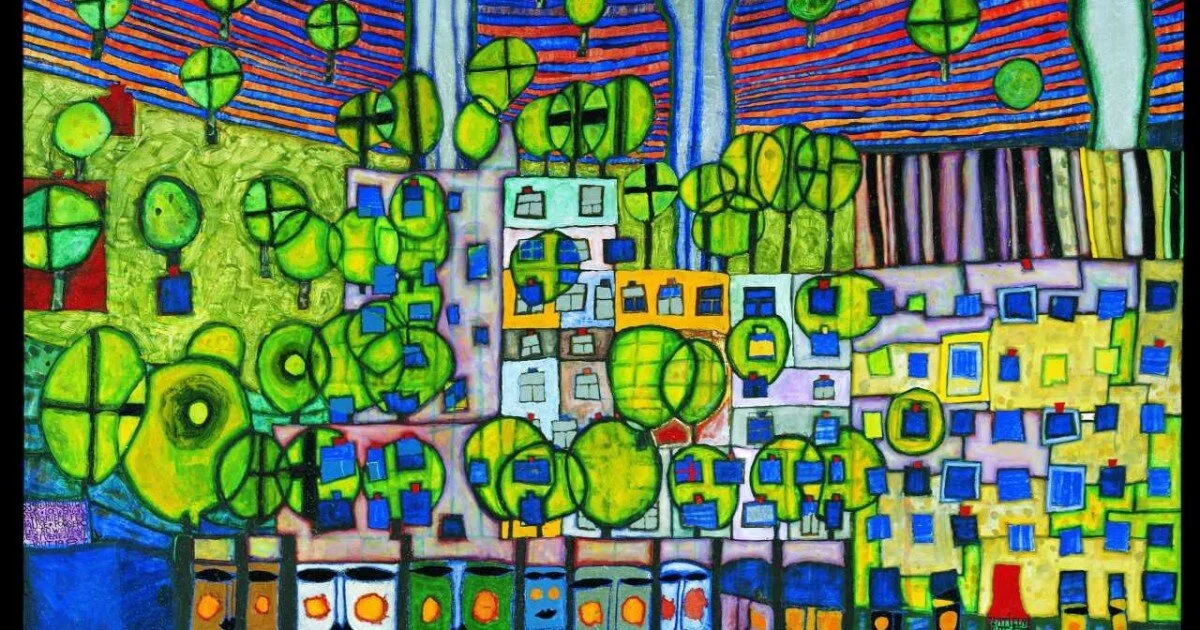
The new Tate Burghfield building will be based on the architecture and philosophy of artist and environmental campaigner Friedensreich Hundertwasser (1928-2000). Plans for the overall building design are at a late stage and it will be similar to the Museum Hundertwasser in Vienna, with trees and plants built into the buildings facade. However three areas of the building have yet to be designed. Burghfield Art group have been asked to come up with a Hundertwasser themed mural to adorn either a courtyard, a bathroom or the cafe wall, your choice. His artworks are wonderfully colourful, playful and have a mosaic quality to them. Comparisons are often drawn between him and Klimt. Hundertwasser used a variety of media including coloured pencils and recycled materials so really anything goes.
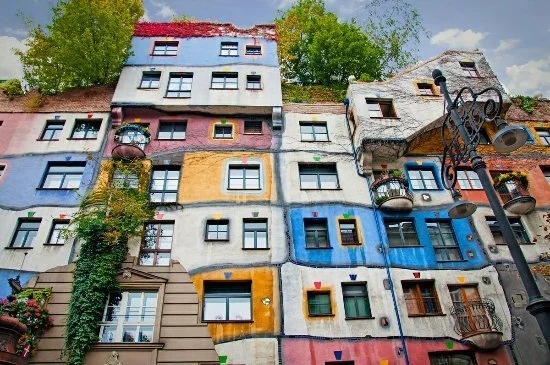
The Hundertwasser Museum in Vienna
Who was Hundertwasser?
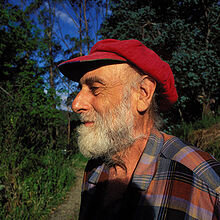
Born in Vienna on 15 December 1928 as Friedrich Stowasser, he was better known by his pseudonym Friedensreich Hundertwasser. Hundertwasser was known for his artworks, architecture and his writings. His artwork had a clear style of its own and he was opposed to straight lines or standardisation, which resulted in his unusual and easily recognisable style. He was said to have described straight lines as godless and immoral! This is perhaps why so much of his work uses spirals and other fluid forms and shapes.
There is a really good summary of his life and works on the Hundertwasser official website so I won’t go into detail here but it is well worth a read.
Suffice to say that Hundertwasser’s work has featured widely all over the world and influenced many other artists who followed him. You may have seen evidence of this without even realising it. Hundertwasser died in 2000 whilst on board the QEII and is buried beneath a tulip tree in New Zealand.
10 Tips for the Self-Taught Artist
One doesn’t need to go to a prestigious art school or have a master artist as a mentor to become a good artist. I’m completely self-taught and have regular sales and commissions. Here are my top ten tips for becoming a successful self-taught artist.
One doesn’t need to go to a prestigious art school or have a master artist as a mentor to become a good artist. I’m completely self-taught and have regular sales and commissions. Here are my top ten tips for becoming a successful self-taught artist.
1. Pick up your paintbrush and paint!
It’s stating the obvious but if you want to become a successful self-taught artist you need to paint and paint lots! I started out by painting every day for 30 days and haven’t stopped since. Self-teaching means learning as you go and you need to paint as much as you possibly can with different techniques, different brushes and different subjects. By doing this you will learn what you’re good at and, more importantly, what you’re not so good at and need to work on to improve.
You are likely to find that there are some things you just can’t get to grips with or don’t understand how to get the effect you’re after (or trying to emulate if you’re trying to create something you’ve seen before). When this moment comes, and it will, it’s time to get outside help to develop further and tip 2 kicks in…
2. Read and watch lots
When I first picked up a paint brush I had no idea what I was doing. My first effort (which you can see on my 30 Day Challenge Story) was awful and I decided that I need to find out how to paint. The wonder of Google presented me a myriad of articles on painting techniques and information on what brushes did what and how to use them effectively. I also watched videos - a lot of videos - on YouTube. Be warned, some are good and some are bad, so be selective! Finally, I bought a lot of books too.
The scientist in me has a tendency towards research so it was quite natural for me to research painting to help me understand it and determine which direction I was going to go in. It was through this that I knew I wanted to start with water colours and progress to acrylics.
3. Practice on a small scale
This is perhaps my favourite tip because it facilitates keeping you painting. If you are looking to develop as a self-taught artist don’t be drawn into trying to paint large complex paintings that you might find on YouTube tutorials. You could spend weeks working on a complex painting only to be disappointed with the results. And on that note, don’t think you are going to become Bob Ross overnight because you followed his video!
My tip is to keep a good stock of small canvases and papers to practice on. I often try out new ideas and techniques on 8x8 inch stretched canvas or A4 sized water colour and acrylic paper. By doing this it means you have time to finish whatever you are trying to create and the smaller space is more forgiving. Also, if you make a terrible mistake you can simply gesso over the canvas (with acrylics anyway) and start again. My practice pieces are never intended to be sold (no matter how good I think they might be) and are there just to let me try things out.
4. Be your own worst critic
It’s very easy to sit back and think you’ve created a masterpiece but in order to learn and improve one needs to learn how to review one’s artwork without bias, which is not always easy. Of course, you may be inclined to think your work is the best it can be and this can prevent you from seeing any obvious flaws or identify weaknesses in your ability or technique.
I know that I am overly critical of my own work and genuinely believe that I haven’t yet created a painting that I am truly happy with. To get around this I have stopped relying on myself and get a second opinion - well several actually.
5. Canvas the opinion of others
It’s one thing to be overly critical of your own work, or worse, too praising of your own work. It’s quite another to solicit the opinions of others and it can be brutal. I found that many of my friends were very complimentary about my work even when I knew there were major flaws evident. Some friends, however, can be very direct and were genuinely kind enough to be blunt and tell me when things were not quite right. I also started to show some of my apparently finished paintings across my social media platforms - strangers can be incredibly honest when you make it clear that that is what you are looking for. I’ve had some equally blunt feedback which has helped me enormously. I will be honest though and say that one has to develop a thick skin at times!
6. Be open-minded
When I first started painting I was fairly sure that I really did not like abstract art. In fact, some years ago my wife took me to the Tate Modern in London to see an abstract art exhibition and I hated it! Afterwards, we had to visit the Natural History Museum so that I could see some rocks just so I could feel better! You know where you are with a rock!
About 6 months into my journey as an artist I was asked if I would be interested in painting something abstract for a friend and they were prepared to pay. My initial response was honest and I said that I didn’t like or paint abstract art! My wife kicked me and politely pointed out that I would love to give it a try. The result was my first abstract painting and my first successful sale of one of my paintings!
Since then, I’ve spent a lot of time researching art and reading up on contemporary and historical artists and I now have a much wider appreciation of art in all its forms. I no longer shy away from any genre and remain open-minded when it comes to deciding what to paint.
7. Aim high but be realistic
I firmly believe that one should always aim high in everything one does. However, it is also necessary to be realistic and stay grounded. The art world can be fickle and there are a great many artists out there who may never sell a single painting despite their work being of very high quality. When setting out on your journey as a self-taught artist it’s a good idea to think about where you want to go with your artwork. Do you want to sell or are you just doing it for fun as a hobby? It may be that you start off without the intention of selling (just as I did) but then discover there is a demand for your work. It is then up to you whether or not you choose to embrace that and develop it further.
It’s worth bearing in mind that in some circles self-taught artists are not considered nearly as highly as those who attended schools or colleges so one needs to be realistic in expectation. That said, the 21st century world is powered through the internet and there are many hugely successful self-taught artists selling their work through their own websites or, in some cases, exclusively through Instagram.
8. Copy other artists to learn techniques
Now, for this tip I need to make it clear that I am not suggesting you copy another artist’s work and try to sell it! Instead, what I’m suggesting is that there is a lot you can learn by trying to replicate another painting. You will learn how brush techniques, layering and blending, for example. If you’re lucky you might be able to accurately recreate a piece but that really isn’t the aim. The idea is to simply try to repeat some of the elements so that you learn what needs to be done to get a particular effect.
I used this method to learn how to paint skies with clouds so that they had depth and didn’t look flat and one-dimensional. I have literally hundreds of pieces of paper with prototype skies!
9. Challenge yourself
Stepping out of your comfort zone is possibly one of the best ways to develop as an artist. If you were to attend an art class or a school you might find that you end up painting what you are told to paint. As a self-taught artist you can paint literally anything. However, deciding what to paint can be difficult if you have a tendency to keep doing what you know you’re good at. I found that asking others to suggest topics worked well. I was very comfortable painting landscapes and trees and was terrified when challenged by a friend to paint something else. However, if I hadn’t taken on the challenge I would never have discovered that I enjoy painting snow-scapes and scenes with the northern lights or that I have a flair for abstract art. I sometimes also look at other artists’ work and see if I could do something similar.
10. Put the time in and record everything
There really is only one way to become proficient at something and that is to put the time and effort in. I set myself the challenge from the beginning to paint every day for 30 days. This not only developed painting as a habit (which I now find impossible to break) but it also allows you to develop. Long pauses between painting will inevitably mean that you won’t benefit from the mistakes and the learning that you gain along the way. The mistakes are the most important. As frustrating as it is to make mistakes they tend to be the things we remember and learn from the most and even now I still experiment with different ideas and techniques - sometimes with disastrous results!
Finally, keep good records of what you do. I find photographing my steps helps a great deal, especially if I’ve created something I’m pleased with and want to remember what I did or how I did it. I also keep a notebook to record details about the materials I used. Basically, the better a record you keep the more invaluable it will become in the future as you continue to develop as a successful self-taught artist.
10 things to do after finishing your artwork
Deciding when a painting is truly finished is challenging and I often return to make changes many times before finally declaring it finished. But that's not the end of the work as an artist. There is still work to be done. Here are my 10 tasks to complete before you can say your work is really finished.
Deciding when a painting is truly finished is challenging and I often return to make changes many times before finally declaring it finished. But that's not the end of the work as an artist. There is still work to be done! Here is my top 10 list of things to do after you’ve finished painting.
Check you really have finished
I really struggle with this. I get to what I think is the end only to see some detail that needs attention or something that's not quite right. If I'm honest, I'm not sure any of my paintings are truly finished but one has to stop somewhere!
So, the first task is to hang the painting up somewhere and let it rest for a while. Give yourself a week or two to keep going back and look at it. Are you really happy with it? No, then go back in and fix it. If you can get to a point where you are as happy as you're going to be then you can declare your painting finished. I must confess I find this harder to do with detailed paintings such as landscapes and much easier with abstracts, which I think are more forgiving.
2. Finish the edges
This task has caught me out so many times. I'd finished my painting and left it on my studio wall waiting to be sold when the sale comes and I realise that the painting looks untidy and unfinished. Panic! I now have to ask the customer if they want to frame it or wish to hang it as it is. If the latter then it's going to need some work.
Generally, if painting on stretched canvas with narrow edges I simply finish off by painting the edges in black or white or, sometimes, the dominant colour in the painting. I certainly don't try to wrap the picture around the edges of the canvas.
If I've painted on a deep-edged box canvas I tend to be thinking ahead and decide early on whether to wrap the image around and therefore paint the edges as I go or decide to just use a solid colour as with the stretched canvas. Either way, a box canvas is far less forgiving because these tend not to be framed.
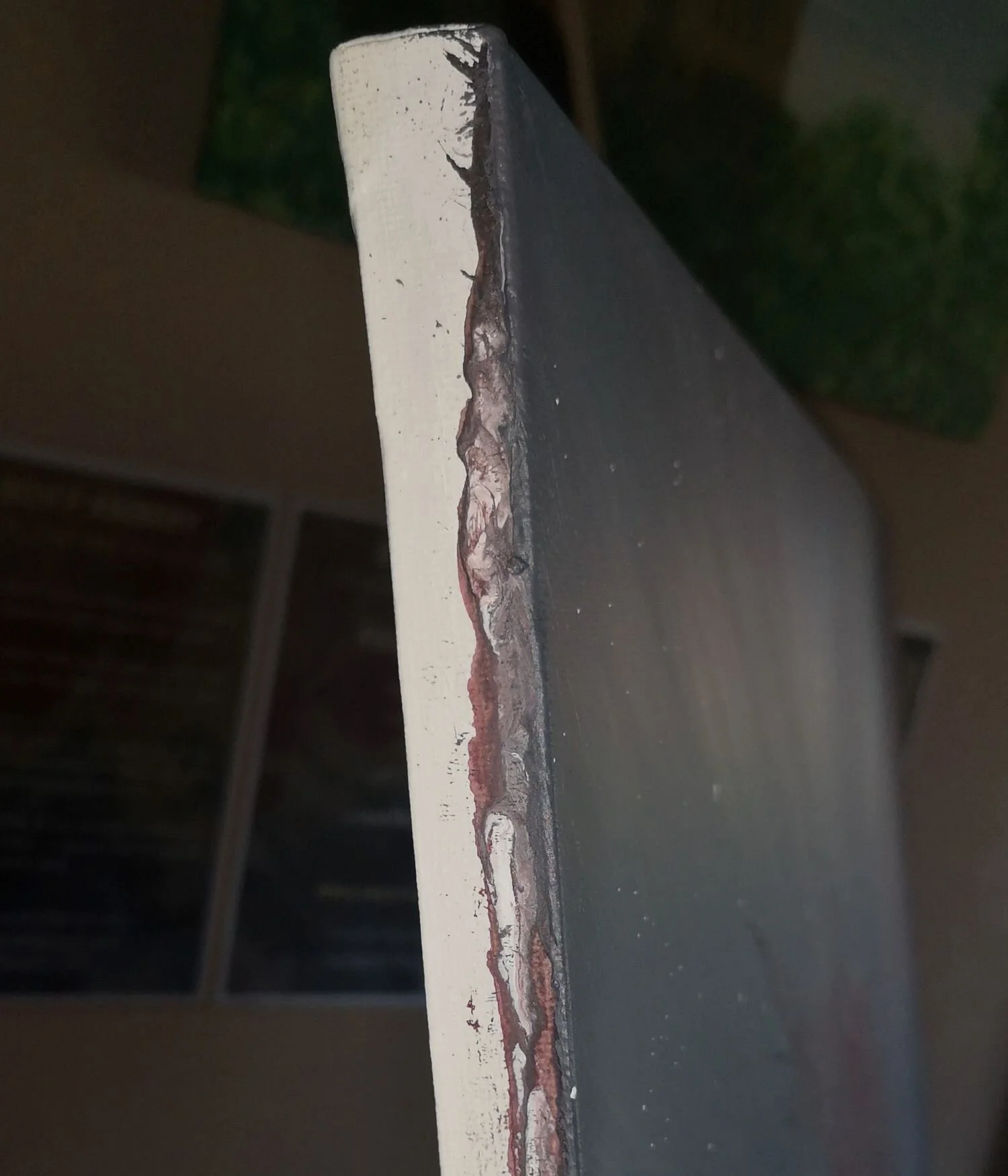
Unfinished edges on stretched canvas - fine if you’re framing.
3. Sign your painting
Signing your painting should be the last time you touch it with a paintbrush. I try to be absolutely certain that I'm finished because, for me, signing is a symbolic moment of closure.
Signing might seem simple but painting a signature is not as fluid and natural as it is when you sign with a pen on paper. It is usual to sign using the same medium you painted with but you may need to dilute the paint to help it flow. The colour matters too. If you have a very dark painting you won't want to sign in titanium white! I try to use the dominant colour in the painting but dial down the saturation so the signature doesn't distract from the painting.
If you have a common name you may want to consider how to make yours look unique. Simply adding an initial could work or, if you have a long name, perhaps just initials. I spent a lot of time deciding on my personal form.
I also sign in the same place (bottom left) but famous artists like Vincent van Gogh signed in unusual places depending on the image. Sometimes, especially with my abstract art, I won't sign on the front at all and some commissions the clients have asked for the signature to be on the back, known as en verso.
For completeness, I also print my name and sign again on the back of the painting and also include the title of the work and the date it was finished.
4. Give it a title
I don't know if one needs to name every painting but I find it invaluable in helping me keep track of what I've produced. Sometimes the title can be obvious like “woodland stream” but with abstract art you can have some fun with naming and get quite imaginative. In fact, I often ask my followers and subscribers to suggest names which also helps build engagement.
Trust me, you really do want to name your paintings. After my first year of being highly prolific in creating artwork I found it very difficult to keep track of which paintings I had in stock or sold!
5. Photograph your painting
This task goes hand in hand with naming. You will need good quality photos of your paintings for a variety of reasons: updating your website, advertising your work to keeping track of what you've created. You'll also want an image for your Certificate of Authenticity.
Photographing paintings is an entire post of its own so, for now, I'll just say that your images need to be well focussed and framed, of high enough quality to be enlarged but not so large that your website grinds to a halt.
6. Create your Certificate of Authenticity
If you're going to sell your artwork you need a CoA. Why? Because it looks professional and enables the buyer to have a record that shows that it was you as the artist that produced the artwork and can help with maintaing its value in the future. I've posted before on this and you just need the basic details of what it is, dimensions, genre, media, a picture and any other details you think useful, such as how to care for the piece. Having spent hours producing these when orders came in I'm now glad that I create them as part of my finishing up process.
7. Apply varnish
Acrylic paint will, in all probability, last for years but if you're selling your paintings you'll want to be sure that they can stand the test of time. Varnishing will protect the paint from fading caused by UV damage from sunlight and prevent dust penetrating into the paint resulting in a dulling of the colours. Varnish can be applied as permanent or non-permanent. With the latter, a specialist could remove the varnish and bring the painting back to its former glory. With the former, once the varnish is applied, that's it!
Personally, I varnish with a non-permanent matt varnish because I like the finish. It goes on milky white and drys clear but without the glare you get from gloss finishes. It is, though, a matter of personal choice.
Just a word of warning: be sure your painting is totally dry before varnishing. Acrylic paintings can take up to two weeks to dry whilst oils can take anything up to a year. Varnish too soon and you risk smearing your painting.
8. Frame it
Not all of your paintings will need to be framed. Box canvases for example can be painted on the edges and hung as they are. Paintings on paper will need mounting between card, at the very least.
In some cases, particularly if the edge finish isn't great I will frame the painting myself. However, there is a risk that a potential customer could be put off if the frame isn't to their taste. Most of the time I leave framing until a customer requests it.
9. Update website
If you have your own art website now is the time to add your painting. Include at least one good quality photo but, if you can, I'd also suggest an image showing the painting hung in a room so that a customer can imagine what it would look like in their home.
Be sure to include as much detail about your painting as possible including your inspiration or reason for creating the piece.
10. Advertise and promote
Finally, all you have to do is let the world know you've created something. It's all very well getting it onto your website but, unless you have a huge following, very few will know your painting exists unless you tell them.
Update your blog to announce the new piece, post on Twitter, Instagram and Facebook. I'd also recommend posting to Facebook and eBay market groups and also to at least one on-line shopping platform. I use Etsy (this is not sponsored!) but I'm sure there are many others you could use. The beauty of these is that they do a lot of the hard work for you.
One final bit of advice: make sure your website prices match prices anywhere else you sell or advertise. Customers don't like to find out that they could have paid less somewhere else for the same thing!
Ten steps to complete so you can truly say your painting is finished! Good luck!
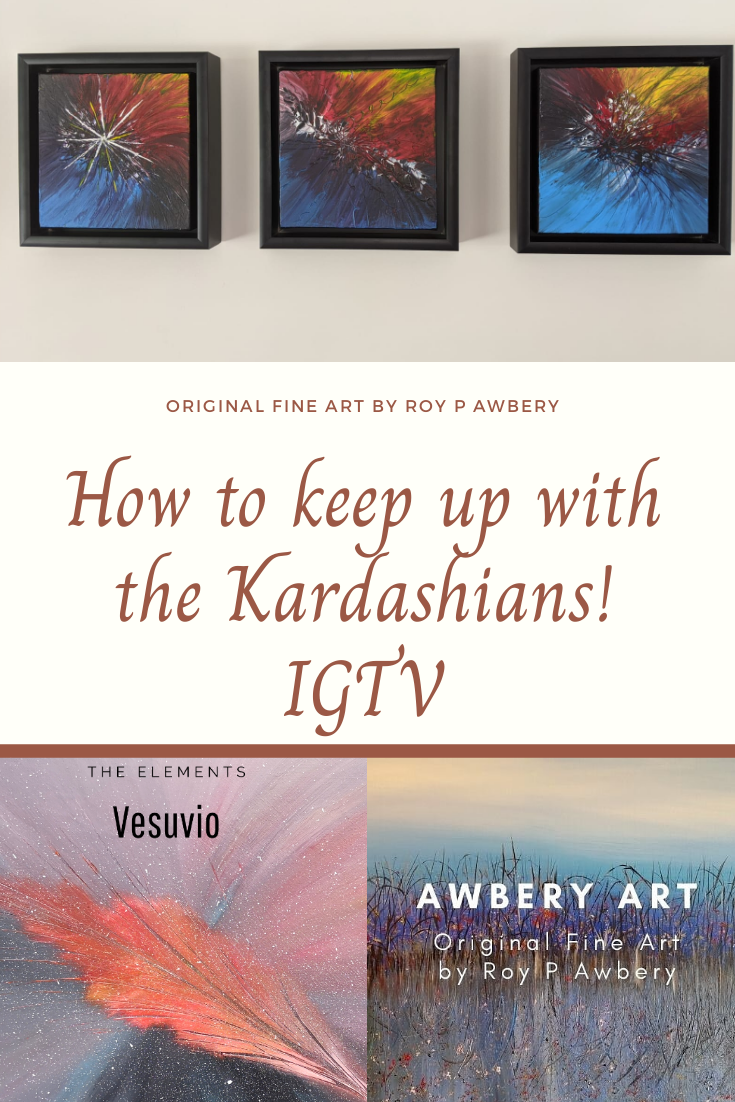
Keeping up with the Kardashians!
It wouldn't be the weekend without another blog or without me trying to learn yet another new trick. Today I've taken my Instagram account to a whole other level by getting into Instagram TV. Brace yourself, I fear this could be a bumpy ride!
It wouldn't be the weekend without another blog or without me trying to learn yet another new trick. Today I've taken my Instagram account to a whole other level by getting into Instagram TV. Brace yourself, I fear this could be a bumpy ride!
Apparently, IGTV is a way of showing longer videos and in a pretty unvarnished state. It's also intended to be a way of showing more of one’s personality rather than polished products. So, never one to shy away from trying something new, I've already posted a video of me narrating a bedtime story. It's not quite Tom Hardy but it's close (😉).
Is this really the way forward? Well, it seems the top so-called influencers have all jumped on this and if it's good enough for the Kardashians then it's good enough for me. Okay, I don't really know who they are but with several million followers they must be quite popular!
I've already started to build a series for my art demos. Going forward I plan to show some of my works in progress which could be interesting because when things go wrong I tend to be quite vocal! I'm not sure how successful this will be but as Instagram is definitely the place to promote artwork I'm going to give it a go.

Why I don't mix my paints
Can you mix student and professional grade acrylic paints? Many websites and indeed artists will say yes. I would argue that you shouldn’t if you want high qualityand consistent results. Here I explain why I don’t mix my paints.
Acrylic paints come in a variety of grades and can be summarised as student grade and professional. Can you mix the two? Why would you want to? When should you use one over the other? What happens if you do mix the different grades? Will the world explode? Will the artworld disown you? So many questions! I’ve used acrylic paints every single day for over a year now and here’s what I’ve learned.

Paint Quality
Acrylic paints generally come in two grades: student grade and professional (also known as artist grade). Professional paints tend to come in a wider range of colours than student grade and have deeper colours due to the increased amount of pigment compared to binder. Students' colors are cheaper but you will find there tends to be a smaller selection of colours and specialist colours may not be available at all. I’ve also found that, due to the increased amount of filler, the colours tend to be weaker. I have found that professional grade paints are more vibrant and lively and are often more consistent in their viscosity (how thick or thin they are) and this makes them easier to blend.
The ability to blend paints is key for me. I paint a large amount of abstract and landscape paintings where fine blending is required. I have found from experience that mixing the two grades of paint and cause the paint to suddently stick or drag which makes blending extremely difficult. Of course, you can blend in both grades but I find it harder if the two grades are mixed so I don’t do it.
There is of course a place for student grade paints. I use them for prototyping my larger paintings and commissions rather than using expensive paints. They are also perfect if you are just starting out but if you are intending to sell your work then I would recommend moving on to professional grade paint, particularly because you will want your colours to have longevity.
Colour Longevity
If you intending to sell your artwork then you will undoubtedly want your work to last a long time. Paints, like anything that is coloured, will be affected over time from exposure to variations in temperature, humidity and light. Fairly obviously you should recommend that your paintings are not kept in direct sunlight - UV radiation will very quickly dull your colours and lead to fading. But there is something you can do to help - use paints with high pigment to binder ratios, which means using professional grade paints.
A subtle point I learned was what is meant by the word “hue”. Without getting into the detail, hue simply means that a colour is intended to closely mimic a natural pigment of that colour but it isn’t actually the genuine pure pigment. This too can have an effect on how long your colours remain as you painted them. So put simply, use the best quality paints you can if you want your work to last.
So, if you ever wondered why many paintings are quite expensive it is likely to be partly due to the cost of the materials used as well as the skill of the artist. The benefit to you of course is that you can be sure that your painting will last a very long time and maybe even increase in value over time.
Getting engaged! How to master Instagram
Positive engagement is key to success with Instagram and I’ve now learned that it’s good to talk. Good engagement can increase followers and your overall engagement rate leading to more sales.
Instagram is clearly the most influential social media platform for promoting one’s artwork and I can honestly say that I get more engagement, which turn into sales, from Instagram than any other platform. But my following and level of engagement has plateaued in recent months so it was time to come up with a strategy. My previous post discussed the importance of imagery and this one will explore positive engagement. It turns out that it’s good to talk!
It really is all about engagement. There are many accounts out there with apparently thousands (even hundreds of thousands) of followers but all may not be as it seems. It turns out that you can buy followers or even pay to get an inflated number! Of course, this means they are not real followers and therefore not real potential customers. One way to spot this is to look at the level of engagement in someone's post. Someone with over 10k followers but only getting around 100 likes and a couple of comments is clearly not looking too genuine or has a very large but disengaged (disinterested?) audience.
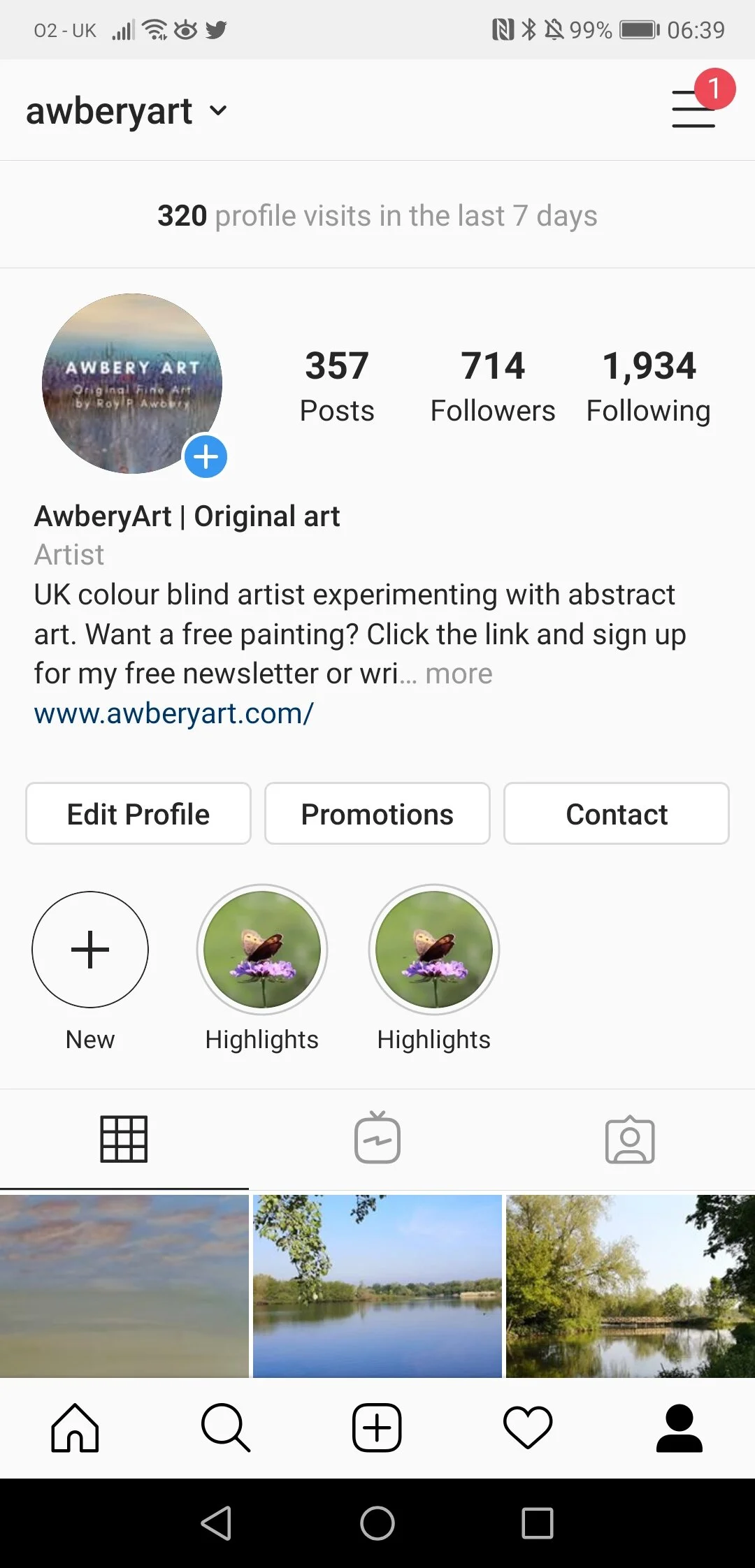
I have therefore learned that success on Instagram is not measured by the number of followers but more by the level of engagement. I now make a point of not only liking an image I genuinely like but also commenting back and sometimes starting a dialogue with someone. It could be about their current work, their inspiration and motivation. Anything, as long as it's meaningful. And it's working. I may only have just under 700 followers but all were organically grown and I get around 15-20% engagement if I count direct messaging. Some of my sales have come directly from Instagram too!
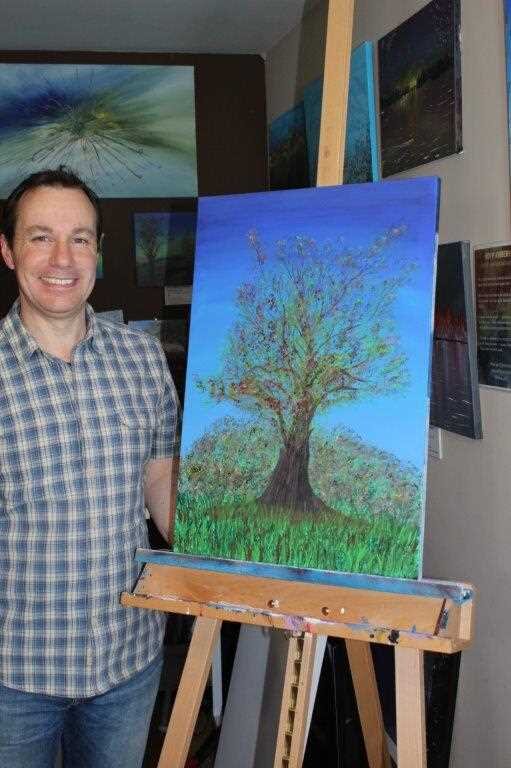
So, put simply, it’s good to talk! I’ve been using this strategy for about a week now and, combined with the photos of me smiling a lot, my engagement rate and number of followers has significantly increased. I’m less concerned with the number of followers as that doesn’t necessarily mean more sales. I think the number of followers is mostly a vanity measure. The engagement level, however, does tend to give an indication of success. If people are contacting me and discussing my paintings it is far more likely that they may want to buy something or, if they are an artist themselves, they may wish to collaborate on a joint article, for example.
It really is good to talk!

Certificates of Authenticity (proving it's really an Awbery!)
Why every one of my paintings has a Certificate of Authenticity to prove provenance and proof you really own an original painting by Roy P Awbery
Every day's s school day, or so it seems as I learn about something else I should be doing with my artwork. Certificates of authenticity turn out to be very important. Find out why.

Certificates of Authenticity -really rather important!
Ads my artwork has been selling more and more I've constantly been reflecting and adapting my approach. This has applied to packaging, shipping and the whole customer experience. However, I hadn't realised the importance of providing evidence that my paintings were my works or indeed asserting my rights regarding copyright. This is where a Certificate of Authenticity (COA) comes in and every painting I produce now has one. But why?
A COA proves that my paintings were actually created by me and, in the future, could be important in determining the provenance and relative value of the work should it be sold later on. This is especially important, if I'm lucky enough to become well-known and valued in the art market.
Certificates of Authenticity can actually make artworks easier to sell, especially in auctions or galleries (although I currently choose not to look for gallery representation). Serious art collectors usually require any work they purchase to include a COA in order to prove provenance should they choose to sell the work on or donate it in the future.
So, if you buy any of my paintings from now on you will always receive a Certificate of Authenticity. As my artwork has already been steadily increasing in value as my work sells you may indeed be glad of having something that proves your painting’s provenance and future value.
Besides, the Certificates look nice too!
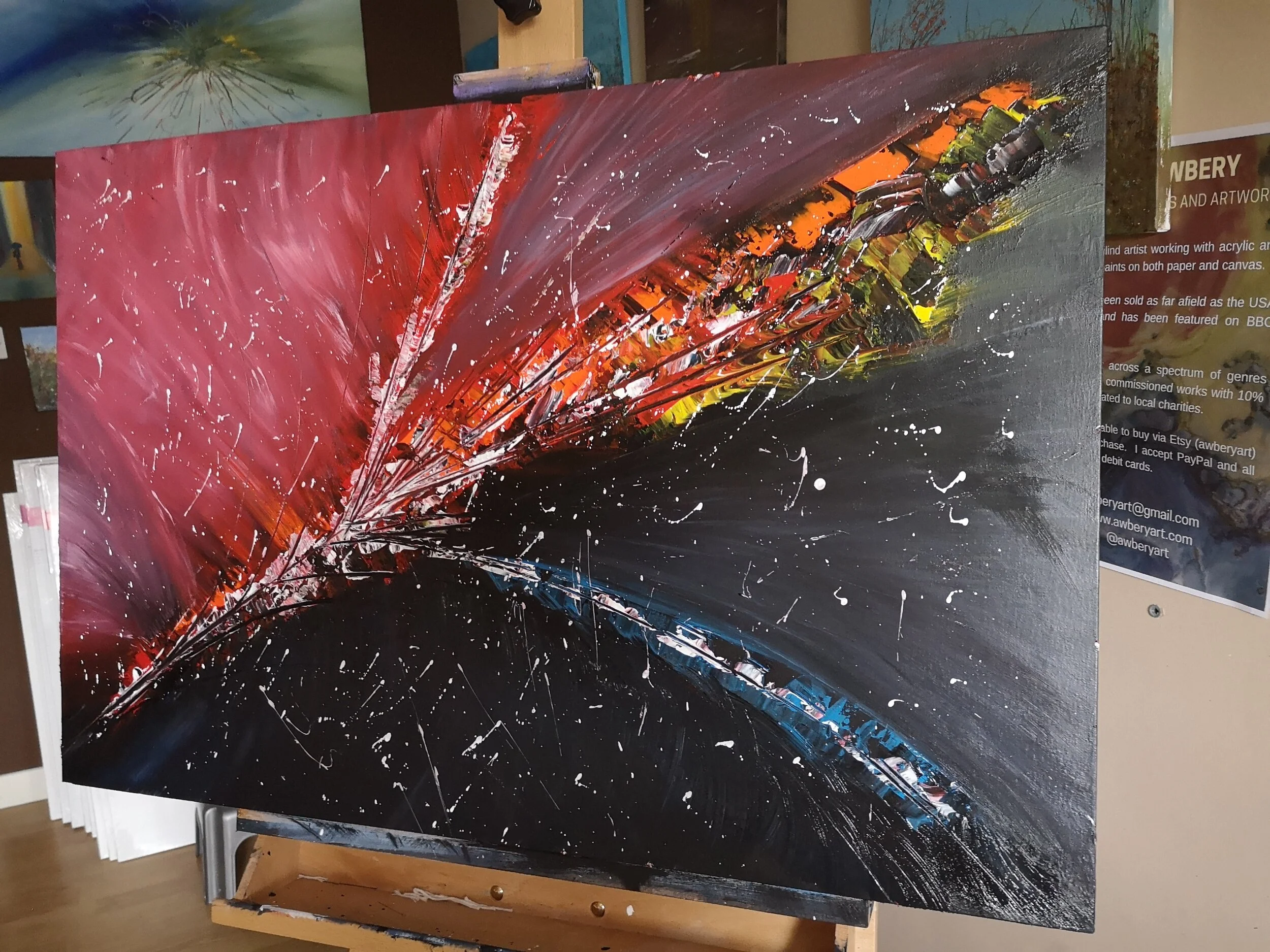
Abstract may be me!
I've discovered that dynamic abstract art may be my niche. Read on to find out why.
Yesterday I posted three paintings titled The Elements and put them up for sale. In less than 24 hours they were sold! I then started work on a larger abstract piece and this prompted a request for a commission. I think I may have found my niche!
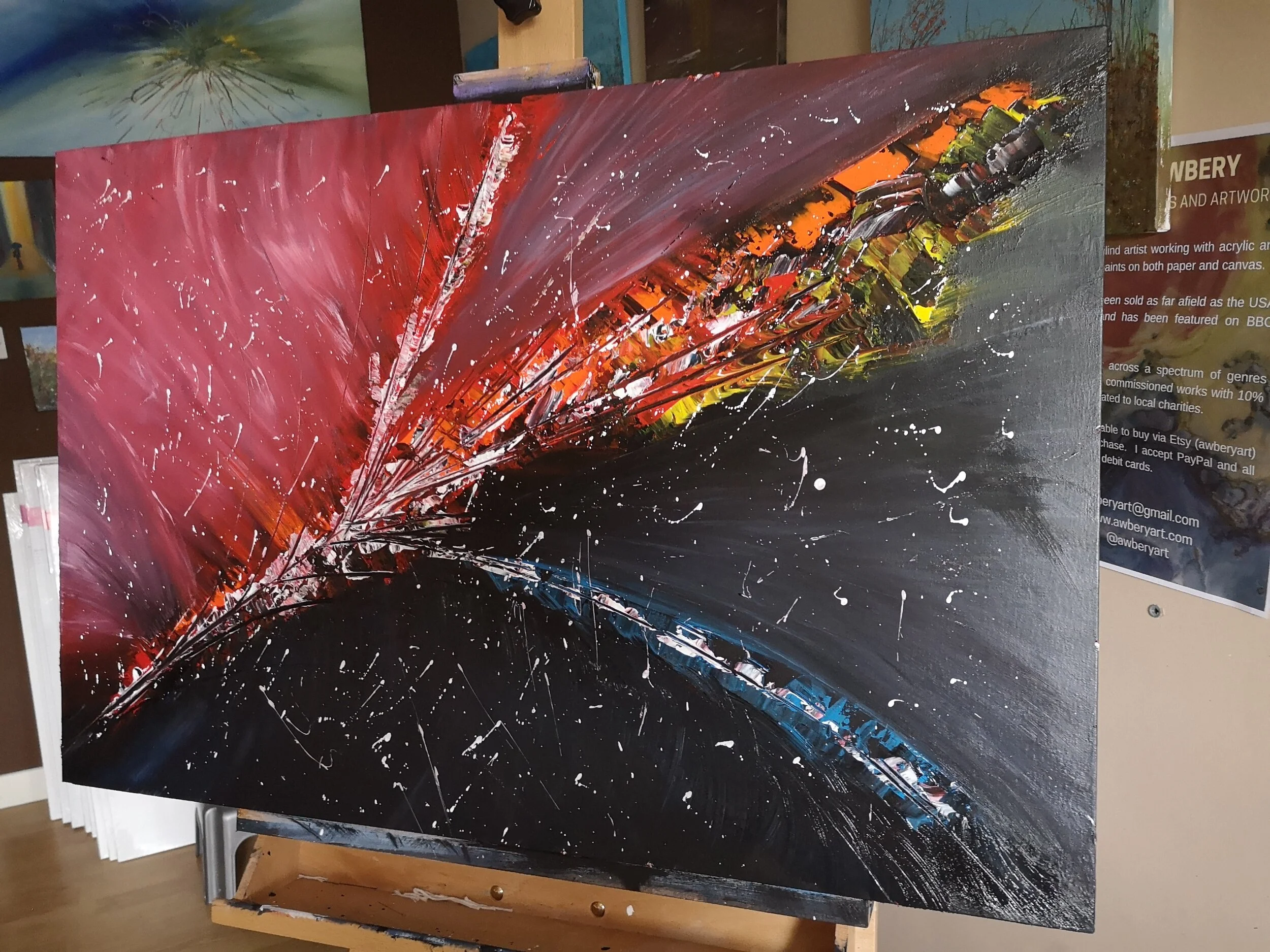
Going large with abstract!
Creating this piece was a lot of fun and just a little messy. There is definitely something to be said for flinging paint around! My wife had something to say too!
This piece isn't quite finished yet. I think I want to add a bit if geometry to it so who knows what it will look like later today!
I found myself completely immersed in the moment when painting abstracts and could happily spend all day making these. And now, I have a much bigger one to work for a client. That should keep me busy for a bit!
Have a great weekend!
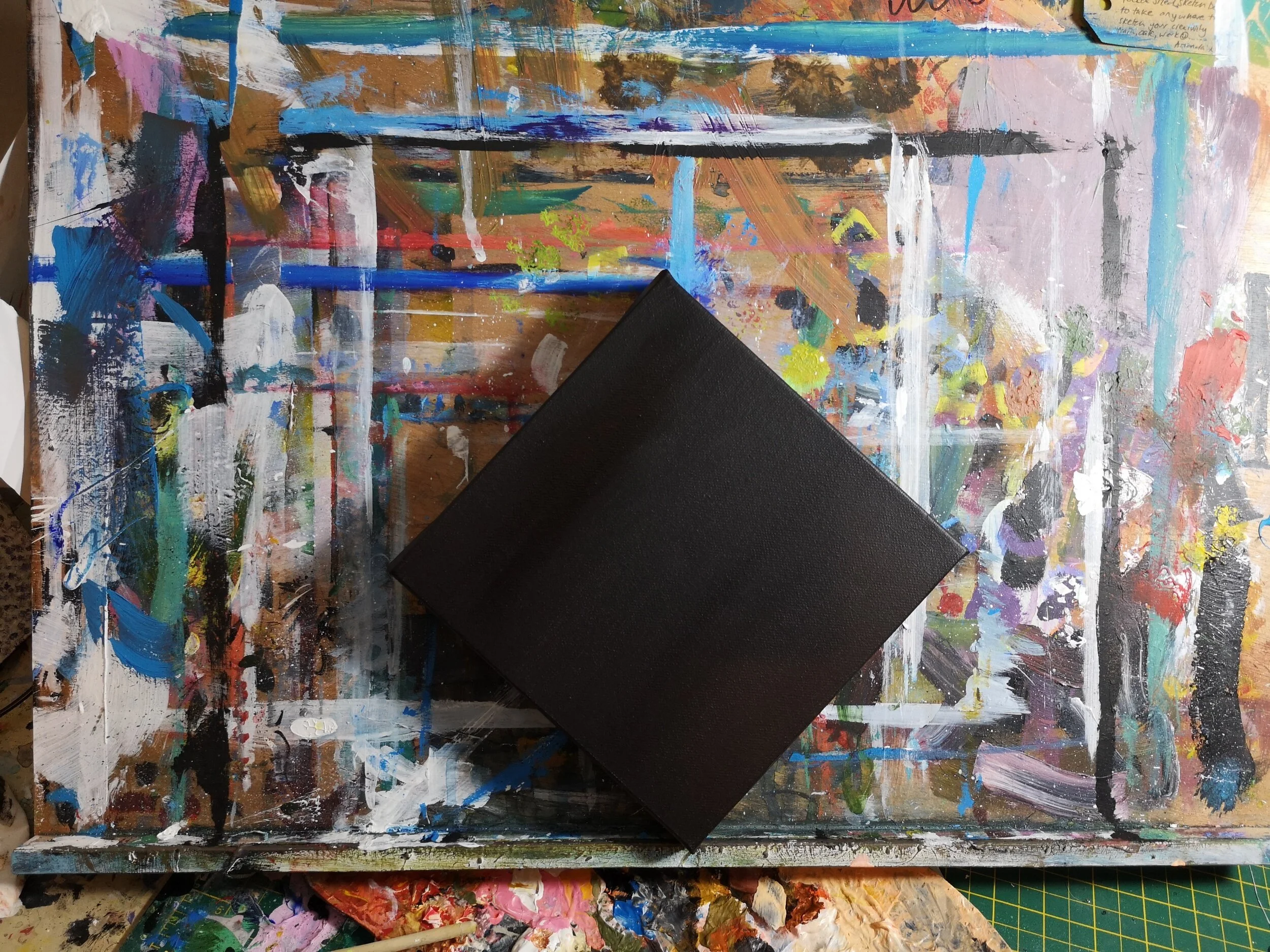
Primed and Ready!
A blank canvas with so much potential and may become a free painting to a subscriber.
A blank canvas! What will I do with it? So much potential and so much time. I'm having a day off from the day job and having a painting day today. Although my desk easel is starting to look like an abstract artwork in its own right!
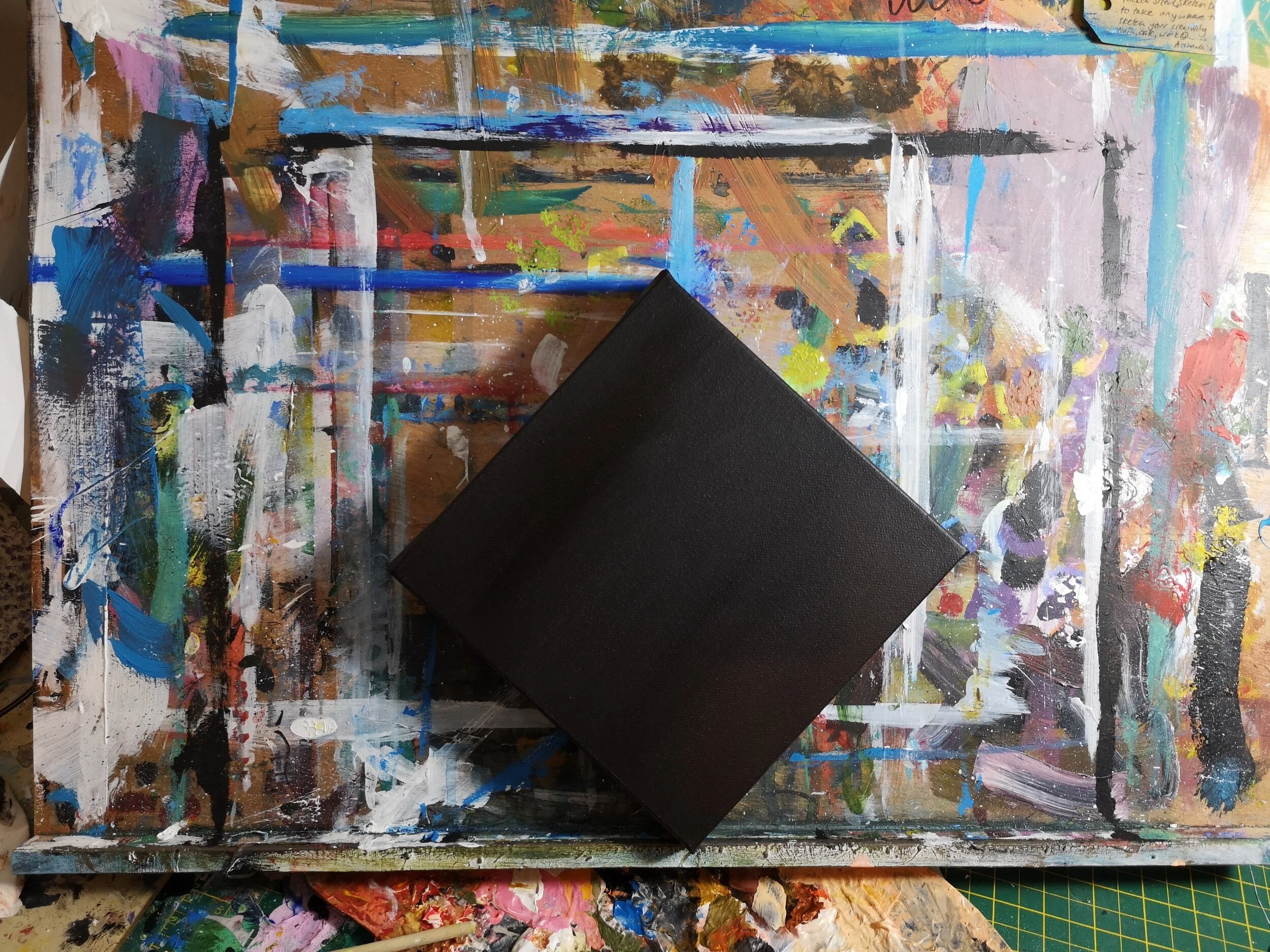
A blank canvas primed and ready
So, mindful that I haven't finished any new paintings for a while (building the new website took all my spare time) I've decided today is a painting day. This small box canvas may become one of my free giveaways and may become an abstract piece. I'm not sure yet. I would usually leave it in a town or city to be discovered but, with lockdown, I'll be giving it away to one of my subscribers. Want it? Simply subscribe!
I've also primed another two larger canvasses and I have no idea what they will become. My floral series was hugely popular and I now only have two left so perhaps I'll create a few more. But then, I love the energy that I put into creating the abstracts so maybe I'll have a messy painting day and unleash my inner child! Well why should kids be the only ones to get messy? Of course, my wife may have something to say if she catches me throwing paint all over the place. I really need to find myself a large studio space! Now there's a thought - imagine the huge canvasses I could create then! Hmmm!
Have a great day folks and subscribe if you want a chance to win a free painting.

Setting up online payments
Being able to accept online payments is essential but also challenging. Read on to find out why.
It's taken me several weeks of hard slog but I have finally taken the next step with my artistry website and set up the capability to take payments online.

Taking online payments - the next step
Up until now my website was simply a gallery to be used to view my artwork before one would be redirected to a separate online shop in the form of Etsy. This was fine to begin with but it came with issues.
Etsy on its own is actually a great selling platform. Once you have your products added with all the right keywords you would have access to potential buyers with relatively little effort. After all, millions of prople visit Etsy every day. Of course, it helps if you pay for advertising so that your shop can be highlighted and found! So, if you're just selling direct from an online shop it's fine.
The other issue is cost. Etsy is actually quite expensive when it comes to fees. You pay to add to your stock listings, you pay to advertise and promote and you pay fees and VAT on your sales. On occasion the fees can be as high as 10% in my experience.
But, there is one other major disadvantage with using a separate online shop. Redirection! If your buyers cannot buy direct from your website and you redirect them elsewhere you risk losing the sale, for a variety of reasons.
Your buyer may trust you and your site but not the site you redirect them to.
Your buyer is not happy entering their personal details into another site.
Your buyer may feel obliged to register with the online shop when they don't want to resulting in walking away.
Some people don't know or trust Etsy or other online shop.
I received feedback from customers and all of these points were raised at some point. The answer? Take payments online direct from my own website.
I won't lie. It sounded easy but the whole process was a long slog. First, my website had to be upgraded to be able to do commerce and this meant creating individual inventory items complete with lots of details. Then, I had to set up business PayPal and Stripe accounts to enable me to accept payments online. Of course, these accounts then have to be linked to your website which proved to be anything but simple! But, after many hours of plugging away at it I have finally set up my online shop within my own website.
Was it all worth it? It's too soon to know but I'm optimistic as ever.
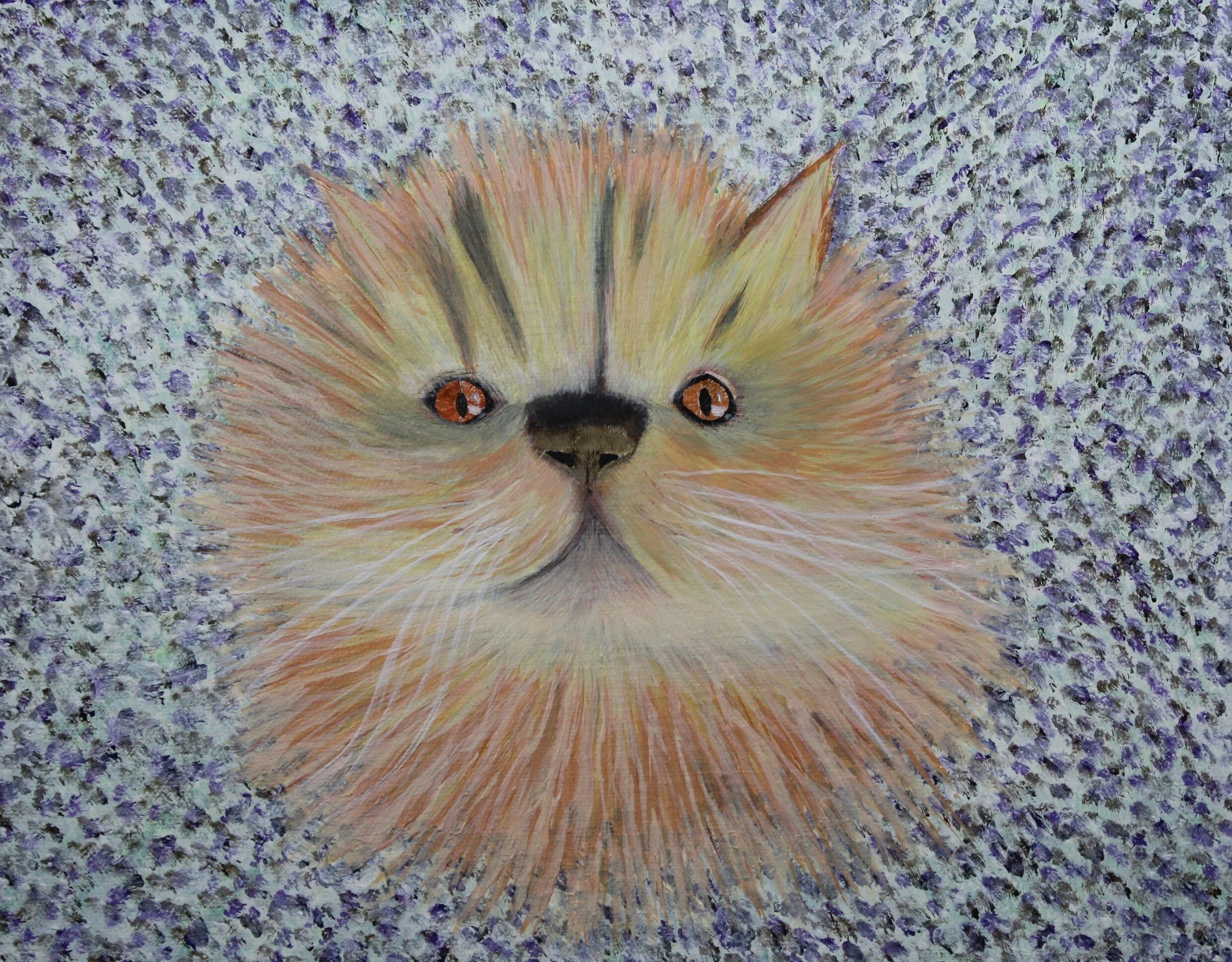
New lights! How lighting can help with colours
Ambient light can have a dramatic effect on a paintings colours. Here I discuss how my artwork was affected and how I solved the problem.
Those of you who follow my blog or my work will know that my unusual angle is my colour blindness. What you may not be so aware of is how light can also affect the colours one sees, whether or not you're colour blind.
I've been painting a wide range of different subjects including night scenes, snowscapes and even cats. When I was reviewing some of previous artwork I noticed that there were differences in the colours that came out, even in similar paintings. This was actually highlighted when I was interviewed on BBC Radio about my artwork: I showed three floral pieces that all had blue skies. Or so I thought. It turned out that all three were noticeably different, but not to me. So what was going on? It was time to investigate.
It turns out that there is a lot of information available on the subject of colour temperature and how it can affect an artist's work. Rather than simply copy and repeat what's already out there, if you're interested in learning more read Dan Scott's informative blog. In summary, it all means that the colours you see depend entirely on the ambient light around you at the time.
So how did I end up painting three different coloured skies? Quite simply, it was the time of day! I painted all three on the same day. However, the first was painted in the morning when it was still dark outside and my studio was illuminated by a tungsten overhead bulb and two LED lamp lights to the side. Both gave off a warm, orange-like colour. The second was painted around midday and, with the curtains open, the north-facing room was bathed in a cool flat light. By the time I painted the final one it was still light outside but significantly dimmer and so my side lights were back on. So you can see, three paintings on the same day with totally different lighting resulted in different skies. So, what's the solution?
I needed to have a consistent light source with the same colour temperature and, ideally, one that represented daylight but also that might be found if my art was displayed anywhere. The solution was daylight bulbs. However, I did a lot of research and almost bought some relatively cheap LED panels from Amazon. Until, I looked at unpaid reviews and comments; cheap LED panel lights are small, not very powerful and not fit for purpose (in terms of art studio lighting). Instead, I found daylight studio lights from Heamar. (My blog is not sponsored so this is just honest commentary). They arrived within a week of ordering, were quick and easy to assemble and appear to be very good qualiry. And they are powerful with their 32W equivalent bulbs. I bought two at a cost of £176. So, did they work? Read on to find out.
Heamar daylight lamp stand
Grammar daylight bulb
I've recently been working on a painting of a cat and to my dismay found out that some green colouring had made its way into the picture. Not good when the cat is meant to be creamy-ginger colour! Under my less-than-ideal lighting I just couldn't see it. Now, with my new daylight lighting setup even I can see something is wrong. To be honest, I can't see the green but I can now see the areas where the colours are not matching. The image below is of the unfinished painting under the new lighting. Clearly, I have some more work to do!
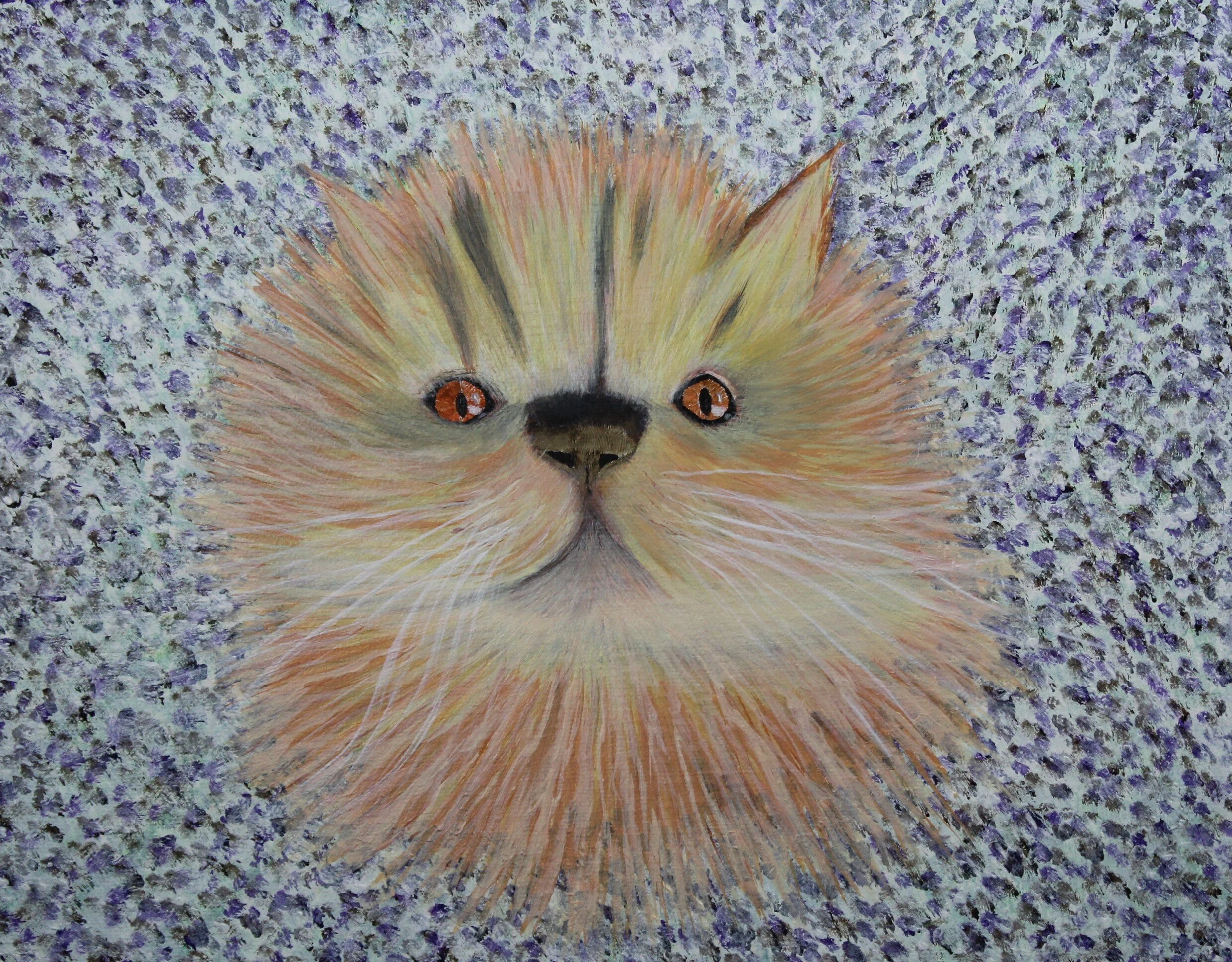
Green cat? Daylight lighting showing the true colours
Finding inspiration from staying in
Here we are heading towards a third week of so-called lock-down due to this dreadful Corona virus. I'm now working from home 100% of my time and go out for an hour a day to walk the dogs for exercise. Of course, this means all my travelling has stopped and so too has the opportunity to see new things from which to draw inspiration for my paintings. Or so I thought.
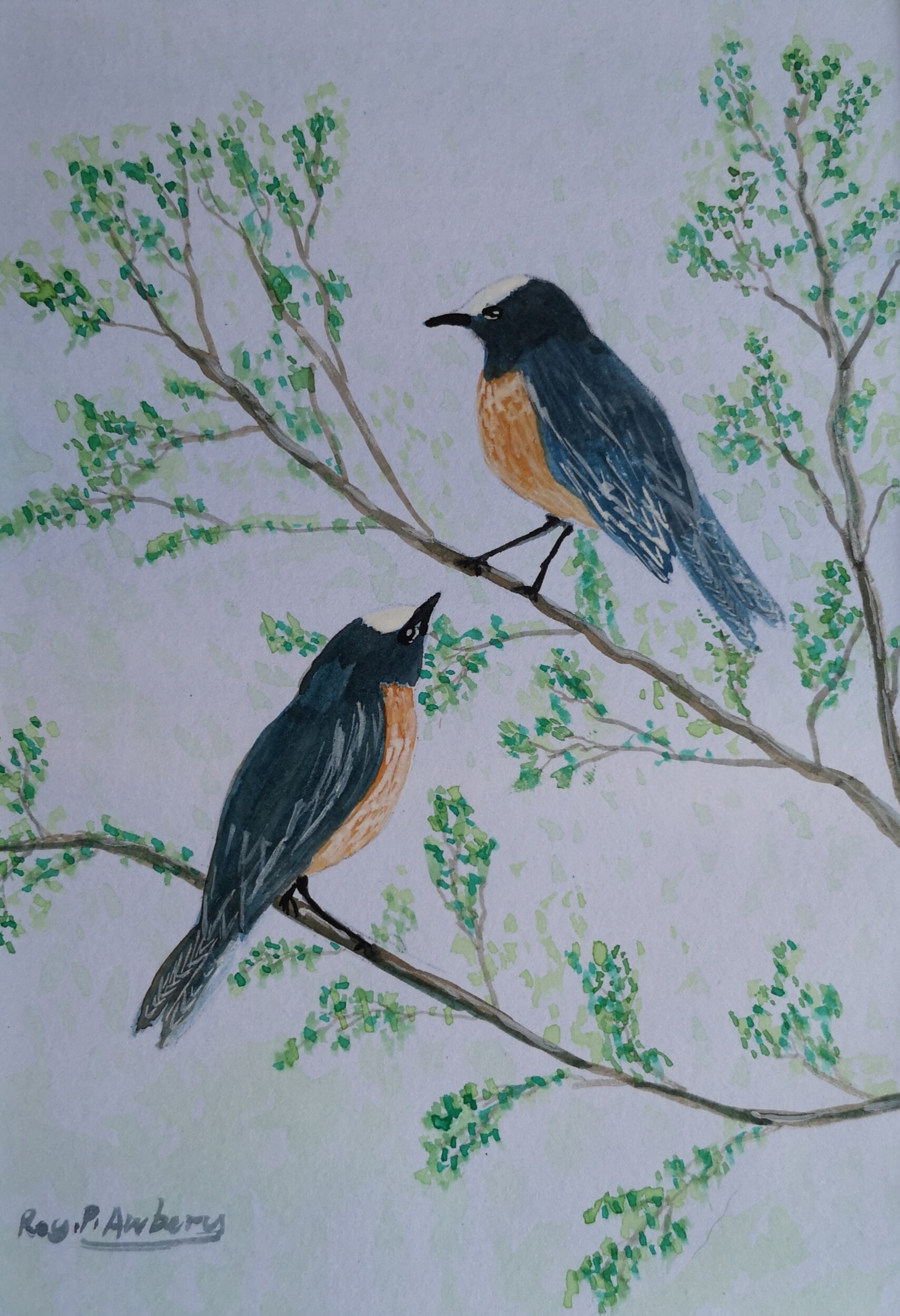
Springtime inspiration in the garden
The water colour painting above was the result of sitting in my garden watching the birds compete for territory and empty my bird feeders, well, when they could get past the greedy pigeons! I think I'd taken my garden for granted and not really considered it as a source of ideas for my work. Now, forced to stay at home I started to properly look at what was right in front of me. Not just birds but flowers too.
Amazingly vibrant tulip
Colourful inspiration all over the garden
I've also found that my love of abstract art can be inspired and motivated from my garden. Just looking closer at some of the plants and flowers provide for a very different perspective. Take this image of the anthers inside the tulip - totally abstract when the wider context is removed but still a beautiful image. I think this would make a great large acrylic canvas and would make a fantastic addition to someone's home. Assuming they like red!
I'm sure I will find more inspiration in the coming weeks. If you'd like to see what comes next why not subscribe and follow my blog?
Abstract inspiration deep inside a tulip
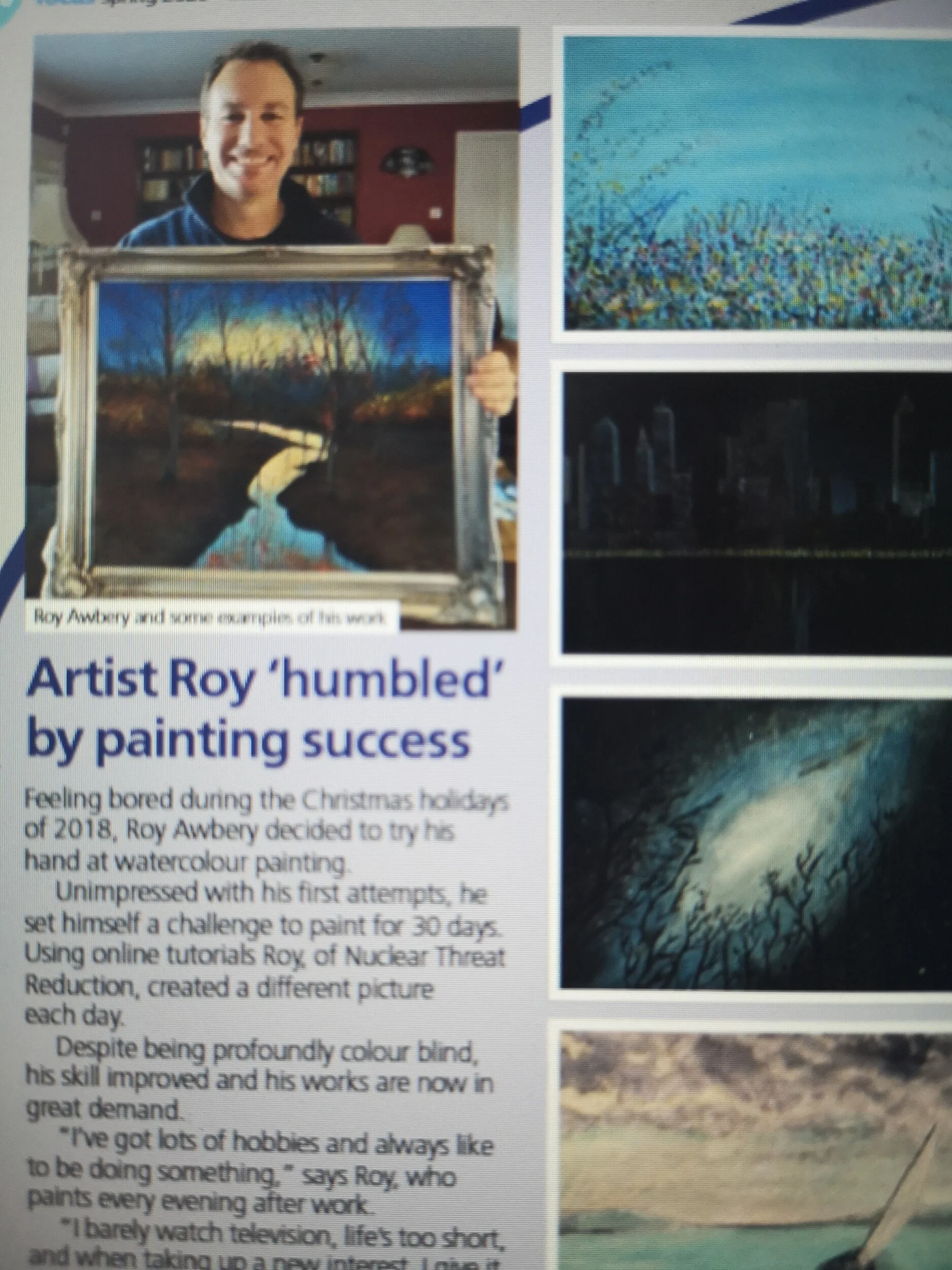
First BBC radio and now the company magazine!
It's still hard to believe that I've only been painting for little more than a year and successfully selling paintings for half that time. I've now sold around 30 pieces of my artwork and am still amazed that people actually like my work enough to buy them.
It's been quite a year so far with highlights including being featured for almost an hour on BBC Radio Berkshire, having my art displayed at the Award winning gluten free cafe, Nibsy's, in Reading (twice!) and now…making it into my company's in-house magazine!
It really has been incredible and, as the article states, I am truly humbled by the success I’m enjoying. I keep trying to add more interest to my work so have now begun to record YouTube videos of some of my work. I'm also enjoying being challenged by friends to paint different subjects that take me away from my comfort zone (landscapes). I'm still growing as an artist but I love the fact that I feel that I can legitimately self-identity as one!
Of course, none of this would have happened if people, possibly you, didn't enjoy and purchase my works. Thank you!
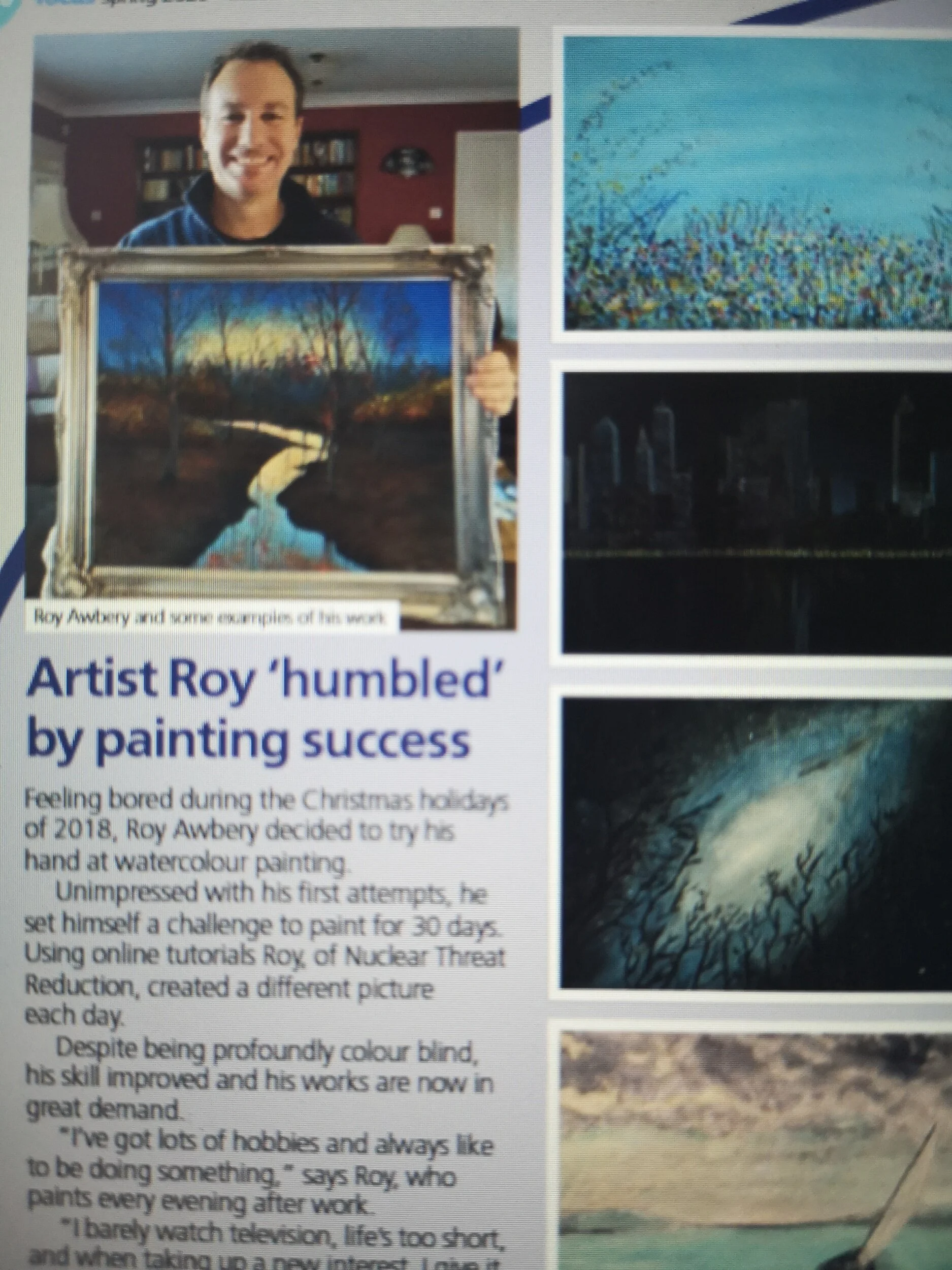
Featured in my company’s in-house magazine

Colour blind artist in great company!
How does one stand out in a world full of successful artists? Marketing people will say you need to find your USP or unique selling point. Mine? Being profoundly colour blind.
Can you see the number in the image here? No? Then, like me, you're probably colour blind. Colour blindness can come in a variety of forms including red-green (the most common); blue-yellow and monochromatic. Then there is me! My colour blindness appears to be a mixture of a problem with my eyes but also my brain. Rather bizarrely, I don't seem to be able to recognise most colours except really bold primary ones. Mixed colours completely confuse me and I'm unable to even suggest the name of a colour in many cases. However, I do still see in colour but possibly not quite in the way that you do.
There is no cure for colour blindness despite the ridiculous adverts one sees on the internet. The most awful of these are the correction glasses from Enchroma. They show clips of apparently colour blind people being given the gift of perfect sight with a pair of sunglasses. Thankfully science has stepped in to debunk these nonsense colour vision correction glasses.
So can I really be an artist with such a condition? Well, I'd argue that the proof is clear. Having been a selling artist for little more than a year I've sold 30 pieces. Many were commissions and the client knew I was colour blind. It's become my USP.
Of course, there are plenty of artists out there who are colour blind and some notable greats included. It's believed that as Monet developed cataracts his colour vision failed and even Vincent Van Gogh was thought to be afflicted.
If you're interested in Understanding colour blindness a bit more this link will get you started. Of course you can also ask me.
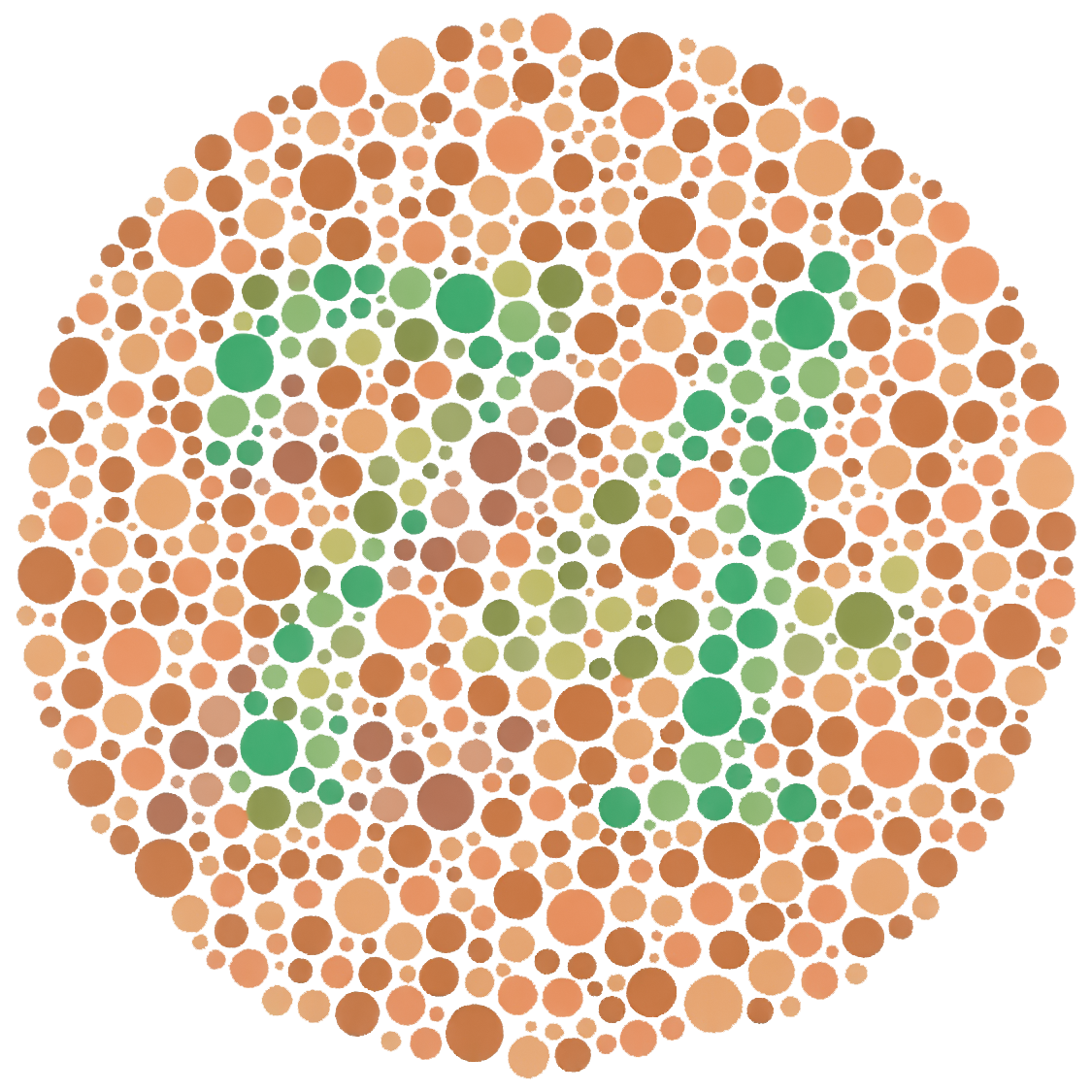
Can't see the number? You're probably colour blind!